Usually, Intergovernmental Conferences to change the EU Treaties receive quite some attention of the continent.
This time, it is different:
Almost unnoticed, the Spanish EU-Council Presidency has invited to an Intergovernmental Conference on the level of Permanent Representatives (that is, the ambassadors of the EU member states) for next Wednesday, 23 June 2010, to agree on the changing of the EU Treaties to allow 18 new members of the European Parliament to officially take part in the EP's work.
The exact distribution of these 18 can be found in the respective additional protocol laid out in European Council document EUCO 11/10 (page 11).
Since this will be a Treaty change, all EU member countries will need to ratify it according to their national procedures.
Showing posts with label Lisbon Treaty. Show all posts
Showing posts with label Lisbon Treaty. Show all posts
Sunday, 20 June 2010


Saturday, 12 June 2010
EU patents and the monster treaty
This TFEU is a monster. I do commiserate with the Judges who are confronted with the inescapable duty to make sense of all that.said Axel H Horns in a post on EU patent litigation, in which he summarised some member states' positions in a hearing in Luxemburg last month regarding the unresolved question whether to introduce a separate Patents Court or not.
And I think most will agree that the Treaty on the Functioning of the European Union (TFEU), the second EU Treaty, is a legal monster, not just in the case of patent litigation...
Wednesday, 9 June 2010
The EU's accession to the European Convention on Human Rights (ECHR): Council refuses access to documents
According to a comment on one of my previous articles, the Council has refused to give access to the draft negotiation directive regarding the EU's accession to the European Convention on Human Rights (ECHR).
Sunday, 6 June 2010
EU, terror & restricted briefings
"We should also provide more detailed information to the European Parliament, for example through restricted briefings.""EU Counter-Terrorism Strategy - Discussion paper" by Gilles de Kerchove, EU Counter-Terrorism Co-ordinator [my highlights]
"At the moment we give the US data and get assessed intelligence in return."
"Improving the effectiveness of the EUPOL Mission in Afghanistan is a particular current priority where such an integrated approach could not only improve the operation of the Mission itself, but also the beneficial impact on the EU's own security. This positive impact on internal security will help justify devoting more resources from Interior Ministries."
Thursday, 27 May 2010
The EU's accession to the European Convention on Human Rights: Draft Council Conclusions (2)
As discussed before, the Draft Council Conclusions regarding the EU's accession to the European Convention on Human Rights (ECHR) are kept hidden from the eyes of the public. The latest (confidential) draft version as discussed by the Council has just been "published" yesterday.
Now there is a partially declassified Commission Secretariat document that contains parts of the explanatory memorandum for the draft negotiation guidelines.
Nevertheless, the most important points are still kept classified.
Now there is a partially declassified Commission Secretariat document that contains parts of the explanatory memorandum for the draft negotiation guidelines.
Nevertheless, the most important points are still kept classified.
Tuesday, 25 May 2010
The EU's accession to the European Convention on Human Rights: European Parliament resolution
Last week, the European Parliament has voted on a resolution regarding the EU's accession to the European Convention on Human Rights (ECHR).
The resolution is horrible to read (Rapporteur: Ramón Jáuregiu Atondo) and although I'm pretty interested in the subject it was no pleasure to go through the document. I will thus focus on the more practical, cooperation-related elements of the resolution.
Three paragraphs seem to be most important regarding the political interaction of the EU and the Council of Europe (paragraphs 7, 31 & 34) as a result of the EU's accession to the ECHR. The three paragraphs portray how the European Parliament sees the participation of the European Union in the working structures of the Council of Europe.
You'll find the three below; I've added links where helpful.
Let's start with para 7:
Maybe someone with a deeper interest or knowledge of the interrelation of international courts and the interaction of different supranational legal regimes may want to take on that task. I'll be glad to link.
What remains unclear politically is how close the non-public draft Council Conclusions regarding the Commission mandate to negotiate the accession are to the European Parliament resolution and what would happen in case that there are contradiction between the two documents.
There is no answer to that question in the EP's resolution. Which is in purpose, I suppose.
PS.: More articles on the accession process in this blog can be found under the label "ECHR".
The resolution is horrible to read (Rapporteur: Ramón Jáuregiu Atondo) and although I'm pretty interested in the subject it was no pleasure to go through the document. I will thus focus on the more practical, cooperation-related elements of the resolution.
Three paragraphs seem to be most important regarding the political interaction of the EU and the Council of Europe (paragraphs 7, 31 & 34) as a result of the EU's accession to the ECHR. The three paragraphs portray how the European Parliament sees the participation of the European Union in the working structures of the Council of Europe.
You'll find the three below; I've added links where helpful.
Let's start with para 7:
Stresses that accession to the ECHR does not make the Union a member of the Council of Europe but that a degree of participation by the Union in the ECHR bodies is necessary in order to ensure proper integration of the Union into the ECHR system and that, therefore, the Union should have certain rights in this domain, particularly:
- the right to submit a list of three candidates for the post of judge, one of whom is elected by the Parliamentary Assembly of the Council of Europe on behalf of the Union and participates in the work of the Court on a footing of equality with the other judges, pursuant to Article 27(2) of the ECHR; the European Parliament being involved either in drawing up the list of candidates in line with a procedure similar to that provided for in Article 255 of the Treaty on the Functioning of the European Union for candidates for the position of judge at the Court of Justice of the European Union,
- the right to attend via the European Commission, with voting rights on behalf of the EU, meetings of the Committee of Ministers when it performs its task of monitoring the execution of judgments given by the European Court of Human Rights or when it decides on the desirability of seeking an opinion from the Court and the right to be represented on the Steering Committee for Human Rights (a subsidiary body of the Committee of Ministers),
This is para 31:
- the right of the European Parliament to appoint/send a certain number of representatives to the Parliamentary Assembly of the Council of Europe when the latter elects judges to the European Court of Human Rights;
And this is para 34:Calls, further, for the Union to accede to Council of Europe bodies such as the Committee on the Prevention of Torture (CPT), the European Commission against Racism and Intolerance (ECRI) and the European Commission on the Efficiency of Justice (CEPEJ); stresses also the need for the Union to be involved in the work of the Commissioner for Human Rights, the European Committee of Social Rights (ECSR), the Governmental Social Committee and the European Committee on Migration, and asks to be duly informed of the conclusions and decisions of these bodies;
Stresses that it is important to have an informal body in order to coordinate information sharing between the European Parliament and the Parliamentary Assembly of the Council of Europe;Apart from these interinstitutional arrangements between the political bodies, it is also worth (and probably more important) considering the legal implications of the EU's accession to the ECHR, but I don't feel like extracting the view of the EP from the resolution.
Maybe someone with a deeper interest or knowledge of the interrelation of international courts and the interaction of different supranational legal regimes may want to take on that task. I'll be glad to link.
What remains unclear politically is how close the non-public draft Council Conclusions regarding the Commission mandate to negotiate the accession are to the European Parliament resolution and what would happen in case that there are contradiction between the two documents.
There is no answer to that question in the EP's resolution. Which is in purpose, I suppose.
PS.: More articles on the accession process in this blog can be found under the label "ECHR".
Tuesday, 18 May 2010
The EU's accession to the European Convention on Human Rights: Draft Council Decision
Well, I'd like to report the details of the
But apparently the public is not supposed to know what the Council plans to decide and it prefers to discuss the rights of EU citizens behind closed doors.
Draft Council Decision authorising the Commission to negotiate the Accession Agreement of the European Union to the European Convention for the protection of Human Rights and Fundamental Freedoms (ECHR)but the Council has decided that this draft is not for the public, although the EU's accession to the ECHR is of constitutional importance for the Union (since it is prescribed by the EU Treaties) and although it is highly relevant for every EU citizen (since the ECHR guarantees individual rights and allows individual complaints).
But apparently the public is not supposed to know what the Council plans to decide and it prefers to discuss the rights of EU citizens behind closed doors.
Wednesday, 12 May 2010
The regulation of regulations

But why say so much when it can be said as cold-blooded as in Article 1 of the regulation that has changed the Union:
"With a view to preserving the financial stability of the European Union, this Regulation establishes the conditions and procedures under which Union financial assistance may be granted to a Member State which is experiencing, or is seriously threatened with, a severe economic or financial disturbance caused by exceptional occurrences beyond its control, taking into account the possible application of the existing facility providing medium-term financial assistance for non-euro-area Member States' balances of payments, as established by Regulation (EC) No 332/2002."These are the words that are worth 60,000,000,000 Euro (this sum is not mentioned anywhere in the regulation) and they are followed by words in the second article that are probably historic in the constitutional history of the European Union:
"[T]he Commission shall be empowered on behalf of the European Union to contract borrowings on the capital markets or with financial institutions."Just to repeat that: A regulation by one institution, the Council, gives new fundamental, quasi-constitutional powers to the another institution of the European Union, the Commission, namely to make debts on the financial markets.
In other words, the Council has given itself the quasi-constitutional right to create quasi-constitutional rights for the Commission. In a meeting that lasted just half a day.
Let's face it: This is the "regulation of regulations".
Picture: © tpcom / CC BY-NC-ND 2.0
Sunday, 25 April 2010
Lisbon Wars II: The Council, the Parliament & international trade

Below you find the changes in the text from the first draft response presented by the Spanish Presidency (the one I covered) compared to the final draft response (Update: revised version with annex) now made public after three Working Party meetings.
Dear Mr Moreira,
I am replying on behalf of the Council to your letter dated 25 February 2010 concerning cooperation between the European Parliament and Council in the area of the European Union's Common Commercial Policy.
As you state in your letter, the Lisbon Treaty provides for some significant changes in the area of Common Commercial Policy. These changes reinforce the democratic legitimacy of EU commercial policy and bring its the legislative procedures in this area into line with those that already apply to most other economic issues. The Council is of course ready to work together with the Parliament, within the limits established by the treaties, to ensure that these new provisions are fully and effectively implemented.
The treaties set out the procedures governing the negotiation and conclusion of international trade agreements. While the Parliament's consent is required for the conclusion of trade agreements where Article 207 TFEU is the substantive legal base, Article 218 (7) TFEU provides for the possibility for the Council to authorise the negotiator to approve on behalf of the Union modifications to an agreement through a simplified procedure. Furthermore, Article 218 (9) provides for the establishment of positions to be adopted on the Union's behalf in a body set up by an agreement, when that body is called upon to adopt acts having legal effects. In both these cases the consent of the Parliament is not required.
As you state, the treaties require the Commission to report regularly to both the Trade Policy Committee (TPC) and to the European Parliament on the progress of negotiations. One has also to note that In addition Article 207(3) TFEU also specifically provides for the TPC to be consulted by the Commission on the conduct of the negotiations and assist the Commission in the negotiations.
Regarding the specific proposals which you set out in your letter, I have the following comments.
On the issue concerning information related to the Council's preparatory bodies in the fields of Commercial Policy and Economic Cooperation, the Council is happy to provide lists of these bodies to the Parliament. The current list is annexed to this letter. As far as the frequency of meetings is concerned, these vary, but a regularly updated calendar of the meetings of all the Council's preparatory bodies can be consulted on the Council's website (details are also in the annex). In order to keep this information updated, and in order to ensure that there is the regular exchange of such practical information necessary to support the new working relationship in commercial policy, contacts between the General Secretariat of the Council and the INTA Secretariat should be intensified. The General Secretariat of the Council will also invite each presidency to notify you with the contact details of the ministers and officials who have been designated to engage with the Parliament on commercial policy. Furthermore, the General Secretariat of the Council can provide the names of the members of the Foreign Affairs Council and, to the extent possible, of the ministers responsible for trade.
The Council shares your view on the importance of effective cooperation and dialogue between the Parliament and Council with respect to international trade agreements, while of course respecting the treaties, which do not confer powers of action on the Parliament with respect to the preparation, negotiation and monitoring of trade agreements. With regard to negotiations, the provisions of Article 207 (3) in fine apply.
The Council recalls that the relevant minister from the rotating presidency normally appears before your committee at both the beginning and end of its period in office, and considers that this practice is positive and should continue. Furthermore, and that these contacts could be stepped up when key trade dossiers reach a crucial phase, the Council favours these political contacts being stepped up in order to facilitate greater clarity and, if necessary, convergence of positions.
The Council is also ready to build on the existing good relations between your committee and the TPC. It considers in particular that opportunities for direct contacts, such as your recent lunch with members of the committee, will become increasingly important. The Council also favours exchanges of views between yourself (together with INTA coordinators) and the Chair of COREPER II. In general, exchanges of views and contacts with the Chair of the TPC should also become remain an important channel for reciprocal exchanges of information and scheduling of work. As far as the particular issues of meetings of the TPC are concerned, the Council holds that the current arrangements on participation should remain unchanged in order to preserve the specific prerogatives of the committee as set out in the treaties.
The Council is also open to more wide-ranging contacts where this would be useful. It will however be for each presidency to determine the exact nature of these contacts depending on the progress on individual dossiers and on specific issues which might need to be addressed during its period in office.
The Council considers that these arrangements, taken together, should enable us to exchange information more efficiently and rapidly, thereby ensuring full and effective implementation of the new provisions on the Common Commercial Policy as introduced by the Lisbon Treaty. Since commercial policy is, by definition, directed towards our international partners, both the Council and the Parliament will wish that the new arrangements will strengthen the EU's performance in this part of the international arena. The Council looks forward to continuing its dialogue with the Parliament in this area, in particular through further contacts between yourself and the Chair of the Trade Policy Committee.
Yours sincerely faithfully,
It is hard to judge how the discussions went on in the Council Working Party on General Affairs, but it seems to me that the final draft response is even weaker in its concessions to the European Parliament than the Presidency draft.
For the President of the Council Chairman of the Permanent Representatives Committee
This is most notably underlined by the deletion of the sentence "reinforce the democratic legitimacy of EU's commercial policy" at the beginning of the letter, showing that the Council doesn't see any change in the Lisbon Treaty.
When the this letter will be approved and sent to the Parliament, it will be very interesting to see how the International Trade Committee will react...
PS.: In case I missed anything in the comparison, please tell me in the comments so I can correct it.
Sunday, 18 April 2010
The legal status of procedures leading to international agreements
The rules governing legislative and other procedures have been changed under the Lisbon Treaty, and their final legal status largely defines how transparent they have to be.
The following answer has been given by the Council of the European Union on the request to publicise an EU document regarding the ACTA negotations (page 3, para 8; own highlight):
I suppose that this assessment will also infringe the European Parliament's right to control the member states when they enter into international negotiations - so will MEPs accept this legal interpretation by the Council?
The following answer has been given by the Council of the European Union on the request to publicise an EU document regarding the ACTA negotations (page 3, para 8; own highlight):
[T]he Council would like to point out that, since the entry into force of the Lisbon Treaty, the scope of the institutions' legislative activities is defined in primary law. Article 289(3) TFEU provides that "[l]egal acts adopted by legislative procedure shall constitute legislative acts". Yet, a procedure leading to the conclusion of an international agreement, as provided under Title V of the TFUE, does not constitute a legislative procedure within the meaning of Article 289 TFEU.On the ground of this assessment, the Council is refusing the full disclosure of the document requested.
I suppose that this assessment will also infringe the European Parliament's right to control the member states when they enter into international negotiations - so will MEPs accept this legal interpretation by the Council?
The European Public Prosecutor
According to Article 86 of the Treaty on the Functioning of the European Union (TFEU), the EU will get a European Public Prosecutor.
In a short information document prepared by DG H 2B in the Council secretariat, the Spanish EU Council Presidency summarises the background of this new EU office introduced by the Lisbon Treaty.
The document ends with two questions. The first question just asks how to put in place the European Public Prosecutor's Office, but the second is much more interesting:
If agreed, this would make him responsible for all "serious cross-border crimes", powers he hasn't been given right away by the Lisbon Treaty. Paragraph 1 of Article 86 so far only gives him power to "combat crimes affecting the financial interests of the Union".
The answers given by the member states will thus pretty much be an indicator how much they are willing to delegate powers in the field of criminal justice to the European Union.
In a short information document prepared by DG H 2B in the Council secretariat, the Spanish EU Council Presidency summarises the background of this new EU office introduced by the Lisbon Treaty.
The document ends with two questions. The first question just asks how to put in place the European Public Prosecutor's Office, but the second is much more interesting:
Is it appropriate to consider the possibility provided for in Article 86(4) right from the start of that procedure?For those of you who don't know the two Lisbon Treaties (TEU & TFEU) by heart already, here's the respective paragraph:
Article 86 para 4 TFEUIn other words, the Spanish Council Presidency is asking the member states whether they want to extend the powers of the European Public Prosecutor right from the beginning.
The European Council may, at the same time or subsequently, adopt a decision amending paragraph 1 in order to extend the powers of the European Public Prosecutor's Office to include serious crime having a cross-border dimension and amending accordingly paragraph 2 as regards the perpetrators of, and accomplices in, serious crimes affecting more than one Member State. The European Council shall act unanimously after obtaining the consent of the European Parliament and after consulting the Commission.
If agreed, this would make him responsible for all "serious cross-border crimes", powers he hasn't been given right away by the Lisbon Treaty. Paragraph 1 of Article 86 so far only gives him power to "combat crimes affecting the financial interests of the Union".
The answers given by the member states will thus pretty much be an indicator how much they are willing to delegate powers in the field of criminal justice to the European Union.
They may - but they don't want to
The Lisbon Treaty offers the "Permanent Structured Cooperation" within the common security and defence policy (CSDP; French: PeSDC) - but member states apparently don't want to use it.
Luckily the EU member states have agreed to the Lisbon Treaty to realise now that they don't want several parts of it.
Luckily the EU member states have agreed to the Lisbon Treaty to realise now that they don't want several parts of it.
Tuesday, 23 March 2010
Comitology 2.0? - Implementing Article 291 TFEU
If I had time today, this blog post would connect my older blog post on the implementation of Article 290 of the Treaty on the Functioning of the European Union (TFEU) with related work on Article 291 TFEU.
I would tell that on 9 March 2010 the Commission has put forward a proposal on how the member states will control the Commission under the Lisbon Treaty, a system they say is known as the Comitology.
I would hint to the PreLex dossier and the European Parliament dossier where you will find future documents on the matter, and then I would go into details of the Commission proposal, pretending I had known all this stuff for ages.
To do this, I should read the original 1999 Comitology decision, its 2006 reform decision and I should link to the 2001 standard rules of procedure for a committee in the Comitology system. I should probably do some more research, e.g. have a closer look into the Comitology register.
But since I don't have time you might have to do this on your own if these things are of any interest to you. Probably not.
Update: The European Parliament is pretty critical about the Commission proposals on delegated acts.
I would tell that on 9 March 2010 the Commission has put forward a proposal on how the member states will control the Commission under the Lisbon Treaty, a system they say is known as the Comitology.
I would hint to the PreLex dossier and the European Parliament dossier where you will find future documents on the matter, and then I would go into details of the Commission proposal, pretending I had known all this stuff for ages.
To do this, I should read the original 1999 Comitology decision, its 2006 reform decision and I should link to the 2001 standard rules of procedure for a committee in the Comitology system. I should probably do some more research, e.g. have a closer look into the Comitology register.
But since I don't have time you might have to do this on your own if these things are of any interest to you. Probably not.
Update: The European Parliament is pretty critical about the Commission proposals on delegated acts.
Sunday, 21 March 2010
COSI - A new important Council body on EU internal security
On 11 March 2010, the newly established Standing Committee on operational cooperation on internal security (COSI) of the EU Council met for the first time.
This working party composed of member states experts from the capitals (thus not from the permanent representations in Brussels; source) was formally set up by the Council on 25 February and is regarded by the Council as part of the major changes of its working structures in Justice and Home Affairs (JHA) after the Lisbon Treaty ratification.
COSI will have the task to
From the summary of discussions of the first COSI meeting we learn that one of the tasks of the committee could be to deal with mutual assistants of member states in case of terrorist attacks as well as in case of natural or man-made disasters (cf. Article 222 TFEU).
Other fields of activity concern "the exchange of personal data for law enforcement purposes", "counter-terrorism measures", "PNR" (Passenger Name Records), all topics on the agenda before the summer, as well as the plan for an EU "internal security strategy" which the Commission wants to propose after the summer of 2010. In this regard, the committee is also interested in the co-operation of the EU internal security agencies CEPOL, Eurojust, Europol and FRONTEX whose representatives can be allowed to participate in COSI meetings.
This new committee looks like one of the new major players in the EU's internal security policies on the side of the EU governments - and I hope the European Parliament and national parliaments will be able to counterbalance its weight in the years to come.
Supplement: In the Council search you can find, for example, the latest agendas or summary of discussions in which COSI is mentioned.
Supplement 2: 16 member states have issued their comments regarding the tasks that COSI should take over. Unfortunately, the documents are only partially public so you don't see which country has sent which questionnaire.

This working party composed of member states experts from the capitals (thus not from the permanent representations in Brussels; source) was formally set up by the Council on 25 February and is regarded by the Council as part of the major changes of its working structures in Justice and Home Affairs (JHA) after the Lisbon Treaty ratification.
COSI will have the task to
facilitate, promote and strengthen coordination of operational actions of the authorities of the Member States competent in the field of internal security. (Article 2)Citing from Article 6 of the Council decision, the European Journal remarks that
[w]hereas the committee is required to report its activities to the Council, the Council solely is required to “keep the EP and national parliaments informed.” Hence, such committee will not be subject to a proper parliamentary control.The scope of the work of the committee looks pretty broad, including a number of controversial security issues discussed in the member states and the EU.
From the summary of discussions of the first COSI meeting we learn that one of the tasks of the committee could be to deal with mutual assistants of member states in case of terrorist attacks as well as in case of natural or man-made disasters (cf. Article 222 TFEU).
Other fields of activity concern "the exchange of personal data for law enforcement purposes", "counter-terrorism measures", "PNR" (Passenger Name Records), all topics on the agenda before the summer, as well as the plan for an EU "internal security strategy" which the Commission wants to propose after the summer of 2010. In this regard, the committee is also interested in the co-operation of the EU internal security agencies CEPOL, Eurojust, Europol and FRONTEX whose representatives can be allowed to participate in COSI meetings.
This new committee looks like one of the new major players in the EU's internal security policies on the side of the EU governments - and I hope the European Parliament and national parliaments will be able to counterbalance its weight in the years to come.
Supplement: In the Council search you can find, for example, the latest agendas or summary of discussions in which COSI is mentioned.
Supplement 2: 16 member states have issued their comments regarding the tasks that COSI should take over. Unfortunately, the documents are only partially public so you don't see which country has sent which questionnaire.
Friday, 19 March 2010
Lisbon wars - The Council fights back
On Wednesday, your humble blogger reported about the letter from the European Parliament's international trade committee to the Council demanding more involvement in international trade matters. In the draft reply from the Council you can see that the other side is fighting back.
First slap in the face:
Second slap in the face:
Third slap in the face (last sentence of the draft reply):
Okay, I admit that I only picked out some parts and that there are some more positive points regarding joint consultations and the new rights or the European Parliament. Yet, these are carefully framed, and nicely embedded into sentences saying that cooperation has been good anyway.
So it's obvious that now is the time that each institutions defends its claims, and why should the Council truckle to the European Parliament?
First slap in the face:
While the Parliament's consent is required for the conclusion of trade agreements where Article 207 TFEU is the substantive legal base, Article 218 (7) TFEU provides for the possibility for the Council to authorise the negotiator to approve on behalf of the Union modifications to an agreement through a simplified procedure. Furthermore, Article 218 (9) provides for the establishment of positions to be adopted on the Union's behalf in a body set up by an agreement, when that body is called upon to adopt acts having legal effects. In both these cases the consent of the Parliament is not required.Or, in other words: "You didn't make your homework by reading the full Lisbon Treaty. Plus, if we want to ignore you, we will find ways."
Second slap in the face:
[A] regularly updated calendar of the meetings of all the Council's preparatory bodies can be consulted on the Council's website [...].In plain English: "Don't ask stupid question that you could answer yourself if you took a look to the Council website." The slap in the face is even harder if you look into the Annex where there are nothing but links to public sources everybody used to EU stuff could easily find.
Third slap in the face (last sentence of the draft reply):
Since commercial policy is, by definition, directed towards our international partners, both the Council and the Parliament will wish that the new arrangements will strengthen the EU's performance in this part of the international arena.My translation: "If you don't behave, the EU will look bad on the international scene. So behave!"
Okay, I admit that I only picked out some parts and that there are some more positive points regarding joint consultations and the new rights or the European Parliament. Yet, these are carefully framed, and nicely embedded into sentences saying that cooperation has been good anyway.
So it's obvious that now is the time that each institutions defends its claims, and why should the Council truckle to the European Parliament?
Europe 2020 - Partial delay after Bundesrat complaint
After Germany's second chamber, the Bundesrat, complained on Tuesday that the schedule for the Europe 2020 strategy was against the Lisbon Treaty rules, European Council President van Rompuy now has postponed parts of the decision.
According to EurActiv, those parts of the 2020 plan dealing with education will not be decided at the European Council next week. This is necessary because the German federal states represented in the second chamber are responsible for education according to the German constitution.
It's exactly this kind of strange compromise I have expected: How can you pass the 2020 strategy partially next week and agree to the educational parts later this year? Isn't this meant to be an integrated strategy that can be agreed to as a whole or not?
And if the Bundesrat could complain that it didn't have enough time to consider the plan, how could all the other national parliaments? Did they receive the documents earlier than the Bundesrat? This would be odd. Or don't they care for their new rights, having eight weeks to consider European legislation? This would be bad.
What this affair shows is that the Lisbon Treaty has actually triggered changes and might have strengthened not just the European Parliament but also national legislatures - if they are conscious of their rights and if the take them seriously.
According to EurActiv, those parts of the 2020 plan dealing with education will not be decided at the European Council next week. This is necessary because the German federal states represented in the second chamber are responsible for education according to the German constitution.
It's exactly this kind of strange compromise I have expected: How can you pass the 2020 strategy partially next week and agree to the educational parts later this year? Isn't this meant to be an integrated strategy that can be agreed to as a whole or not?
And if the Bundesrat could complain that it didn't have enough time to consider the plan, how could all the other national parliaments? Did they receive the documents earlier than the Bundesrat? This would be odd. Or don't they care for their new rights, having eight weeks to consider European legislation? This would be bad.
What this affair shows is that the Lisbon Treaty has actually triggered changes and might have strengthened not just the European Parliament but also national legislatures - if they are conscious of their rights and if the take them seriously.
Wednesday, 17 March 2010
Germany's second chamber: Europe 2020 timetable violates Lisbon Treaty
In a freshly published press release the European Chamber of the German Bundesrat has criticised the timetable of the Europe 2020 process foreseeing a decision at the European Council on 25-26 March 2010 as violating the rights of national legislatures under the Lisbon Treaty. It also dismisses parts of the 2020 strategy as violating the Treaty.
The Bundesrat is the second chamber of the German legislative branch uniting representatives of the 16 federal states. It claims it has had less than three weeks between the formal reception of the Europe 2020 document and the European Council next week where a decision on the strategy is planned (see agenda, p.2).
What is remarkable is that the European Chamber of the Bundesrat - a body able to take constitutionally binding decisions on behalf of the Bundesrat set up to react quickly to EU developments when urgently needed - has almost never met in its history.
Thus, the fact that the European Chamber of the Bundesrat now issues a decision on behalf of the full institution shows the seriousness of the matter for the German federal states.
One has to remind that under the Lisbon Treaty, national and subnational legislatures must have eight weeks to react to European policy proposals under the subsidiarity clause, as was explained in a letter by Barroso sent to the parliaments in December.
To my knowledge, this is the first time that a national legislature is claiming that the Lisbon rules have been violated.
The question is now: How will the Commission and the European Council President react?
Update: Although the press release on the website of the Bundesrat has a time stamp from today, 17:29, the decision must have been taken yesterday because some newspapers published the story in today's printed versions.
The Bundesrat is the second chamber of the German legislative branch uniting representatives of the 16 federal states. It claims it has had less than three weeks between the formal reception of the Europe 2020 document and the European Council next week where a decision on the strategy is planned (see agenda, p.2).
What is remarkable is that the European Chamber of the Bundesrat - a body able to take constitutionally binding decisions on behalf of the Bundesrat set up to react quickly to EU developments when urgently needed - has almost never met in its history.
Thus, the fact that the European Chamber of the Bundesrat now issues a decision on behalf of the full institution shows the seriousness of the matter for the German federal states.
One has to remind that under the Lisbon Treaty, national and subnational legislatures must have eight weeks to react to European policy proposals under the subsidiarity clause, as was explained in a letter by Barroso sent to the parliaments in December.
To my knowledge, this is the first time that a national legislature is claiming that the Lisbon rules have been violated.
The question is now: How will the Commission and the European Council President react?
Update: Although the press release on the website of the Bundesrat has a time stamp from today, 17:29, the decision must have been taken yesterday because some newspapers published the story in today's printed versions.
The involvement of the European Parliament: Common Commercial policy
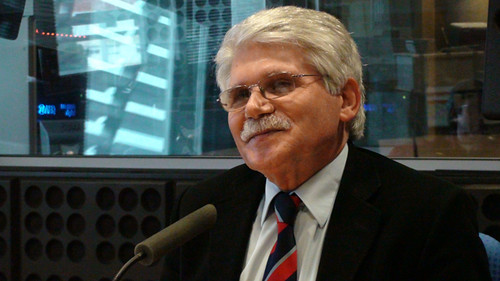
Vital Moreira (photo), the Chair of the European Parliament Committee on International Trade (INTA), has addressed a letter to Miguel Sebastián Cascón, the Spanish Minister for Trade, Industry, and Tourism and his counterpart in the Council, the EU's second chamber, boldly demanding full involvement of the Parliament in all international trade affairs.
The letter is very similar to the one sent by EP president Buzek regarding international agreements (see my last post). And it is also full of parliamentary self-confidence, speaking of the "re-parliamentarisation" of a policy area that was escaping Parliament's scrutiny for over 50 years.
First, the parliament committee chair demands background information on all working groups that the Council has established to set up or administer international agreements.
Second, parliament wants to be involved ahead of the establishment of trade agreements.
Third,if I understand the abbreviation CTP correctly, the parliament wants to have access to meetings of the Council's Committee on Trade Policy (CTP*) and wants to be consulted by the chair of COREPER II, thus the ambassador of the country holding the rotating Council presidency, on a all matters that concern the planning of future policies in the area of international trade.
This is yet another proof of the new powers of the European Parliament and the willingness to use these powers with the self-confidence of a first chamber in a parliamentary system - which is a good sign!
* CTP is not explicitly explained in the text, but the Committee on Trade Policy is mentioned earlier in the document as Anda19 notes on Twitter.
The letter is very similar to the one sent by EP president Buzek regarding international agreements (see my last post). And it is also full of parliamentary self-confidence, speaking of the "re-parliamentarisation" of a policy area that was escaping Parliament's scrutiny for over 50 years.
First, the parliament committee chair demands background information on all working groups that the Council has established to set up or administer international agreements.
Second, parliament wants to be involved ahead of the establishment of trade agreements.
Third,
This is yet another proof of the new powers of the European Parliament and the willingness to use these powers with the self-confidence of a first chamber in a parliamentary system - which is a good sign!
* CTP is not explicitly explained in the text, but the Committee on Trade Policy is mentioned earlier in the document as Anda19 notes on Twitter.
Wednesday, 10 March 2010
New verbs in the EU: (to) lisbonise

Found in a Council document (page 2):
"This text – already "Lisbonised" – was drafted taking into account the comments made by the delegations during the meeting of the Working Party [...]. COM said it would re-submit in due course a "fully Lisbonised" proposal [...]."I agree with Kattebel: This eurospeak sounds like a disease - and I suppose that this is how the Council feels having lost power under the Lisbon Treaty.
Welcome to the new European Union - it's "Lisbonised".
PS.: Let's invent more funny verbs that we could propose to the Council and the other institutions - the comments' section is open!
What is an EU legislative act?
The debate about what the Lisbon Treaty actually means continues.
Now the conference of EU committees of member states' parliaments (COSAC) has raised the following question:
This is why COSAC expects an answer on its question from European Council President van Rompuy until the end of May.
It's still amazing that these questions haven't been raised and answered before the ratification of the Lisbon Treaty - what were the parliaments doing when they agreed to the text...?
Follow-up: The legal status of procedures leading to international agreements
Now the conference of EU committees of member states' parliaments (COSAC) has raised the following question:
What is a "legislative acts" when it comes to the involvement of national and regional parliaments of EU member states?This involvement is foreseen in Protocol N° 2 (on the application of the principles of subsidiarity) to the Lisbon Treaty. But if the EU will apply a very narrow interpretation of "legislative acts", the national legislatures might be left aside in quite a number of relevant matters.
This is why COSAC expects an answer on its question from European Council President van Rompuy until the end of May.
It's still amazing that these questions haven't been raised and answered before the ratification of the Lisbon Treaty - what were the parliaments doing when they agreed to the text...?
Follow-up: The legal status of procedures leading to international agreements
Subscribe to:
Posts (Atom)

