
The EU is a messy place.
But: There is nothing better than the list of official document registers from EU institutions, agencies and other bodies on the Europa.eu website to start with when you are looking for the raw stuff, the originals, the backgrounds, the hidden treasures, the lovely bullshit language produced by administrators, diplomats, politicians, and lawyers to make our life better (and theirs, because they make a living on producing all these documents).
I promise, you will love it!
Thursday, 10 June 2010


Wednesday, 9 June 2010
The death of the Baroness
If blog posts could kill, Bruxelles2's latest article on eurobaroness Ashton would have been her coup de grace.
But I'm afraid she is doomed to live...
But I'm afraid she is doomed to live...
22 EU parliamentarians withdraw signatures from controversial declaration - update

Update (17 June): It seems like the declaration has been adopted. Here it is, on the list of adopted declarations. What a disgrace!
According to Europaportalen.se, MEPs have started to withdraw their signatures from a controversial EP declaration.
The declaration that would become an official European Parliament position if at least 369 signatures from MEPs were collected demands that search engine searches should be part of the data retention directive, all this under the pretext of the fight against pedophilia.
This declaration, if I understand correctly, would effectively mean (if translated into EU law) that every search that we do on the net would have to be stored for two years and made accessible to the security authorities if requested.
After Europaportalen.se Journalist Christian Wohlert reported about the issue last week, it became news in the UK and in Sweden and it also has been noted with concern in Germany and in France.
At least, the news coverage was successful: According to Wohlert, 22 MEPs have withdrawn their signatures so far.
Yet, there are still 309 MEPs left who think that every EU citizen is a potential pedophile and that each of our searches needed to be stored and made available if the police and other security forced wanted to know more about us - the EP at its best!
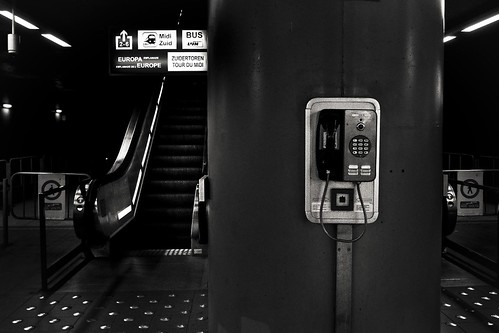
Picture: © stephenjohnbryde / CC BY-NC-SA 2.0
The EU's accession to the European Convention on Human Rights (ECHR): Council refuses access to documents
According to a comment on one of my previous articles, the Council has refused to give access to the draft negotiation directive regarding the EU's accession to the European Convention on Human Rights (ECHR).
The European Financial Stability Facility is there
EU Law (Wordpress) writes about the fact that the legal framework for the Euroepean Financial Stability Facility - the mechanism to handle the big bailout money - is in place now and describes its details. Worth reading!
Tuesday, 8 June 2010
Thanks to New Europe...
... for publishing, almost every week, European blog posts in your newspaper!*
* Just open one of the New Europe issues that are available as PDF. Usually it is on page 22.
* Just open one of the New Europe issues that are available as PDF. Usually it is on page 22.
Monday, 7 June 2010
European sub-culture & gender clichés
Just amazing. A European film about sub-culture that might also destroy some gender clichés. Girl Power!
Can't wait for 2011!
Can't wait for 2011!
Relations between the EU Commission and national parliaments in 2009
The Commission has issued a report on its relations with the national parliaments and the activities of these parliaments vis-à-vis the Commission.
Instead of starting to read the full text, I recommend starting with the Annex on pages 12-14, because there you have a nice overview over how active member states' parliaments were in 2009.
Very interesting to note is that Portugal was by far the most active country sending opinions to the European Commission (the Barroso bonus?).
And it is also worth noting that in countries where there is a second or higher chamber, this chamber seems more likely to issue opinions than the main parliament (maybe because the main parliament's majority has usually control via the government).
However, it will be very important to compare these figures with the figures for 2010, because this will be an indication whether the Lisbon Treaty rights for the national parliaments actually made them more involved with EU legislation.
Instead of starting to read the full text, I recommend starting with the Annex on pages 12-14, because there you have a nice overview over how active member states' parliaments were in 2009.
Very interesting to note is that Portugal was by far the most active country sending opinions to the European Commission (the Barroso bonus?).
And it is also worth noting that in countries where there is a second or higher chamber, this chamber seems more likely to issue opinions than the main parliament (maybe because the main parliament's majority has usually control via the government).
However, it will be very important to compare these figures with the figures for 2010, because this will be an indication whether the Lisbon Treaty rights for the national parliaments actually made them more involved with EU legislation.
One year ago...
... at this time I was sitting in a polling station in Germany to support the administration of the European Parliament elections 2009.
At that time, my 120 posts series on the pre-EU-election process had also come to an end. Without that series and the interest it created for me to write about European communication and European day-to-day politics, this blog might not have evolved, I might have given up writing soon after I started.
And so I would not have discussed issues like "Footsoldiers & Generals in European Communication", I might not have written "The Week in Bloggingportal: Thinking about the future" and blog posts like "Kücükdeveci - A European case" would not have been followed up by other European blogs today, four months after I wrote them.
I must admit that after the EU election process I was "a little" disappointed, but the process has helped me to develop a voice and the disappointment has become determination to move things forward more actively. I'm not yet sure whether we will succeed, but since it cannot get worse than it was one year ago, it's still worth trying.
But one year ago, I was sitting in a rather quiet polling station in Germany hoping that more people would show up in the afternoon...
At that time, my 120 posts series on the pre-EU-election process had also come to an end. Without that series and the interest it created for me to write about European communication and European day-to-day politics, this blog might not have evolved, I might have given up writing soon after I started.
And so I would not have discussed issues like "Footsoldiers & Generals in European Communication", I might not have written "The Week in Bloggingportal: Thinking about the future" and blog posts like "Kücükdeveci - A European case" would not have been followed up by other European blogs today, four months after I wrote them.
I must admit that after the EU election process I was "a little" disappointed, but the process has helped me to develop a voice and the disappointment has become determination to move things forward more actively. I'm not yet sure whether we will succeed, but since it cannot get worse than it was one year ago, it's still worth trying.
But one year ago, I was sitting in a rather quiet polling station in Germany hoping that more people would show up in the afternoon...
Sunday, 6 June 2010
Thank you, Slovenia!
I know, the vote was tight (see Reuters), but big thanks to all Slovenians for the vote in favour of European unity instead of insisting to continue a border conflict that is contrary to the idea of a European continent where the old borders aren't dividing lines anymore!
European Parliament staff statistics by nationality and grade
Earlier this year, the Spanish EU Council Presidency has written a letter to the Secretary General of the European Parliament, Klaus Welle, asking for detailed staff statistics of the European Parliament Secretariat in the same way as the EP wants these statistics from the Council.
One month later, Klaus Welle now has presented his answer: 7652 people work for the European Parliament secretariat (there are about 3400 people working for the Council Secretariat, see here).
And here is the breakdown of total staff figures by EU country (note that also other nationalities work in the EP!) ignoring the distribution by grade (see link above for the details):
Austrian - 98
Belgian - 955
British - 382
Bulgarian - 156
Cypriot - 28
Czech - 165
Danish - 185
Dutch - 230
Estonian - 105
Finnish - 219
French - 852
German - 656
Greek - 297
Hungarian - 210
Irish - 126
Italian - 703
Latvian - 114
Lithuanian - 125
Luxembourgish - 144
Maltese - 73
Polish - 320
Portuguese - 312
Romanian - 218
Slovak - 145
Slovenian - 117
Spanish - 503
Swedish - 184
One month later, Klaus Welle now has presented his answer: 7652 people work for the European Parliament secretariat (there are about 3400 people working for the Council Secretariat, see here).
And here is the breakdown of total staff figures by EU country (note that also other nationalities work in the EP!) ignoring the distribution by grade (see link above for the details):
Austrian - 98
Belgian - 955
British - 382
Bulgarian - 156
Cypriot - 28
Czech - 165
Danish - 185
Dutch - 230
Estonian - 105
Finnish - 219
French - 852
German - 656
Greek - 297
Hungarian - 210
Irish - 126
Italian - 703
Latvian - 114
Lithuanian - 125
Luxembourgish - 144
Maltese - 73
Polish - 320
Portuguese - 312
Romanian - 218
Slovak - 145
Slovenian - 117
Spanish - 503
Swedish - 184
EU, terror & restricted briefings
"We should also provide more detailed information to the European Parliament, for example through restricted briefings.""EU Counter-Terrorism Strategy - Discussion paper" by Gilles de Kerchove, EU Counter-Terrorism Co-ordinator [my highlights]
"At the moment we give the US data and get assessed intelligence in return."
"Improving the effectiveness of the EUPOL Mission in Afghanistan is a particular current priority where such an integrated approach could not only improve the operation of the Mission itself, but also the beneficial impact on the EU's own security. This positive impact on internal security will help justify devoting more resources from Interior Ministries."
Saturday, 5 June 2010
Footsoldiers & Generals in European Communication
We have met earlier this week in his office to talk about this topic, and so it is great to see that he continues the discussion online and connects it to projects like "The Hub" here in Brussels.
Martin is, to my knowledge, the only high-ranking EU official who writes a true personal blog, one that is set up not on an EU platform and one that connects his reflections on work-related issues with stories of cultural events he has participated in or more personal issues that he comes across in his life outside the (usually black) box of EU bureaucracy.
Here is what Martin finds in his article on young communicators (my highlights):
"I have often written about the decline in the paradigm of mass membership party politics in our democracies but increasingly I realise that those democratic forces are still ‘out there’ – they just express themselves in different ways, ways made possible in large part by rapidly evolving net-based applications.And this brings him to one question:
What I find fascinating about these developments is that they are ‘messy’ – by which I mean that they are organic and their evolution is unpredictable and uncontrollable (think of ‘viral’ videos).
They are thus the antithesis of what public administrations like."
"Young, committed Europeans like Julien and Jon and Polly are the footsoldiers of the European ideal but, the thought occurs to me; in such a world, is there any place or role for generals?"I think there is a role for generals. There is a role for generals because, without proper co-ordination, our societies, whether manifested offline or online, will not be able to keep up social achievements and social structures that are worth protecting, worth preserving.
We need generals who can channel good ideas. We need experts who are good in what they do and who can guide others to make the right choices in order sustain what is existing, to re-construct what has been destroyed by accidents or to build new what can change the world for the better.
We need trusted people and institutions who can take responsibility for certain tasks, e.g. European institutions - not necessarily governmental - to keep up or to foster European conversations on topics that would otherwise be ignored or that would be held in separate spheres although they concern all of us.
The major change might be to ask how we chose these persons, how we build these institutions, what democratic or popular, organised or viral mechanisms we can accept to let certain persons or groups of persons to be our generals, generals for a day, for a month or for 10 years depending on the task they fulfil in our society's communication(s).
The question is rather: Do we need all the majors, the captains, the lieutenants and all the other middlemen and middlewomen who often don't add value to our society?
Do we need command chains that take days for what direct communication can do in an hour? Do we need committees full of highly-paid experts discussing solutions for a problem for one year who then just come up with the conclusion that there is a problem but that one cannot agree on the means to solve it?
Do we need people who co-ordinate the co-ordination of co-ordinated efforts to solve a small problem where one direct question to the right person - which is made possible by modern communication - could bring the solution without delay and with much less costs for society?
The problem of European communication as organised by the EU institutions today is that these chains of commands don't work at the speed of 21st century communication.
Our European "generals" are eaten up by co-ordinating the co-ordination of the co-ordination and the chains of command have evolved into circles of command in which no one needs to feel responsible for failure, where the circle of communication has become the true nature of daily activity, not the question how to identify problems and to solve them.
Those who are experts in solving problems are forced to spend their life talking to hierarchies about the fact that the problem exists instead of actually being allowed to spend the same time in building solutions. They could be our generals, but they are made wheels of a machinery that is best in building more wheels, but not in moving the machine forward.
"Young communicators" as Martin has called us cannot stand this kind of machinery and we use modern communication to circumvent the hierarchies.
We are not necessarily the ones who would be good generals. We are even ready to let ourselves guide by generals who have our trust as long as we have the feeling that we are trusted by our generals, too.
But as long as we have the feeling that we need to talk to a lieutenant who will then talk to his captain who in a month might address a major who later on will maybe write a letter to the general to ask whether the lieutenant should be allowed to talk more in detail with us, we prefer spending our precious footsoldier's lifetime with different activities than waiting for the general to give an order that would probably just make us walk in circles.
Modern communication has allowed us to directly find like-minded people and to live an important share of our lives without generals and their hierarchies. We try to solve little problems on our own or through small, self-coordinated efforts, and we have more fun spending our time like this.
But there will be the day when we will need the generals again to co-ordinate the solution of the big problems of our societies - and either the present generals and their institutions have changed until then and are ready to actually support us, or we will replace them, including their bureaucracies.
And since the EU's institutional system uniting European and national bureaucracies is the archetype of a "modern", command-cycle bureaucracy that slows us down more than it makes us move forward, it may be the one we will start with if it doesn't change very soon...
Picture: © gilderic / CC BY-NC-ND 2.0
Friday, 4 June 2010
The female Commissioners' communication under scrutiny
Journalist-blogger Prune Antoine is heavily complaining about the heterogeneous quality of the (female) EU Commissioners' press services.
For her series "Drôles de Dames" (see my post), Prune wanted to have short interviews with all female Commissioners.*
So while Prune is very satisfied with the press services of Hedegaard, Reding and Georgieva, she is very unhappy with the press service of Vassiliou, Malmström and Ashton, who are either putting her off or are not reacting at all to her requests.
Prune also regrets that Margot Wallström isn't there anymore - and I agree, in particular since I have the impression that with the new Commission the interest in a common approach to EU <–> citizen communication has been pretty much lost.
One should mention that Wallström's portfolio is now managed by Commissioner Reding who seems to be able to deal with the press (see above) but who doesn't show much interest in modern communication as her disastrous letter to the Commission web editors - which is basically a big fat "NO!" to social media communication - has proven.
So we have some way to go in the interaction between the EU institutions on all levels with journalists and citizens, both via traditional media and through new communication channels, an issue that I've been talking about with many people over the last weeks here in Brussels...
* The ones she got are a very interesting read, so interesting that they even got the attention of the well-read German feminist blog Mädchenmannschaft ("Wie macho ist die EU?"), for which I then took the time to translate the first interview given by Commissioner Reding into German (the interview has been published below the original German article).
For her series "Drôles de Dames" (see my post), Prune wanted to have short interviews with all female Commissioners.*
So while Prune is very satisfied with the press services of Hedegaard, Reding and Georgieva, she is very unhappy with the press service of Vassiliou, Malmström and Ashton, who are either putting her off or are not reacting at all to her requests.
Prune also regrets that Margot Wallström isn't there anymore - and I agree, in particular since I have the impression that with the new Commission the interest in a common approach to EU <–> citizen communication has been pretty much lost.
One should mention that Wallström's portfolio is now managed by Commissioner Reding who seems to be able to deal with the press (see above) but who doesn't show much interest in modern communication as her disastrous letter to the Commission web editors - which is basically a big fat "NO!" to social media communication - has proven.
So we have some way to go in the interaction between the EU institutions on all levels with journalists and citizens, both via traditional media and through new communication channels, an issue that I've been talking about with many people over the last weeks here in Brussels...
* The ones she got are a very interesting read, so interesting that they even got the attention of the well-read German feminist blog Mädchenmannschaft ("Wie macho ist die EU?"), for which I then took the time to translate the first interview given by Commissioner Reding into German (the interview has been published below the original German article).
Thursday, 3 June 2010
The EU's accession to the European Convention on Human Rights: Details on draft negotiation directive published
I've criticised the lack of publicness of the negotiation process of the EU's accession to the European Convention on Human Rights and this critique remains valid..
But there seems to be some advances in the transparency of the process, after the recent partial declassification of the explanatory memorandum on the draft accession negotiation directive.
Today, two very conclusive documents discussing aspects of the draft negotiation directive have been made public, namely the different option concerning paragraph 10 of the draft directive regarding the co-respondent mechanism and concerning paragraph 11 on the involvement of ECJ regarding the compatibility of legal acts of the Union with fundamental rights.
Having given a quick glance at the two documents I can say that they are a very interesting read, in particular because they contain changes to their previous, non-public versions (documents DS 1355 & DS 1356).
I'll go through them when I have some time, but maybe some of you are quicker than me...
But there seems to be some advances in the transparency of the process, after the recent partial declassification of the explanatory memorandum on the draft accession negotiation directive.
Today, two very conclusive documents discussing aspects of the draft negotiation directive have been made public, namely the different option concerning paragraph 10 of the draft directive regarding the co-respondent mechanism and concerning paragraph 11 on the involvement of ECJ regarding the compatibility of legal acts of the Union with fundamental rights.
Having given a quick glance at the two documents I can say that they are a very interesting read, in particular because they contain changes to their previous, non-public versions (documents DS 1355 & DS 1356).
I'll go through them when I have some time, but maybe some of you are quicker than me...
Wednesday, 2 June 2010
German blogs start earning money through micro-payments
Thanks to the Swedish micro-payment service Flattr, a number of German blogs as well as the newspaper taz have started to earn money via contributions from online readers.
Although the service is still in a beta version and although you need an invitation to participate, several German sites have started using it and actually got visible amounts of money, despite the limited user base Flattr has of today.
Here some examples:
It's not yet big money, but all those who cry saying that you can't earn money with open and free online content could soon be proven wrong...
PS: One question this service raises is whether this is money you have to pay taxes on (the answer is rather a Yes). It also may make a blog become a commercial interest site, preventing us from using content that is put under a non-commercial Creative Commons license.
Although the service is still in a beta version and although you need an invitation to participate, several German sites have started using it and actually got visible amounts of money, despite the limited user base Flattr has of today.
Here some examples:
- Spreeblick - 110,92 € in 14 days
- Lawblog - 33,06 € in May
- taz - 143,55 € in 12 days
- Yucca Tree - 17,54 € in 15 days
- Pixelscheucher - 0,52 € for 5 clicks
- Robert Basic - 4,91 € for 29 clicks
It's not yet big money, but all those who cry saying that you can't earn money with open and free online content could soon be proven wrong...
PS: One question this service raises is whether this is money you have to pay taxes on (the answer is rather a Yes). It also may make a blog become a commercial interest site, preventing us from using content that is put under a non-commercial Creative Commons license.
Details on the euPad regulation
Last month, the standard-setting EU news site Brussels Jungle has revealed that there will be the euPad, the all in one EU tablet with the best new features for the old continent.
The EU telecommunication ministers now have asked the European Commission to draft a regulation that should lay down the specifics of the device as a necessary condition for EU citizens and business to be allowed to use it on a daily basis.
First indications on the details of the regulation show that according to EU standards it needs to operate in 23 languages at once, blocking any website or app that doesn't fulfil the requirements. Every application and website shown on the euPad thus has to be confirmed by a special national authority set up for this purpose only. These authorities could be co-ordinated by the European Moveable Electronic Devices and Small End User Computers Agency (EMEDSEUCA), probably set up on La Réunion.
The European Commissioner for Consumer Policy, John Dalli, also has already made clear that every euPad has to come with a warning sign that covers at least 30% of the frontside listing all the possible dangers of the internet.
In the same line, the European Agency for Safety and Health at Work has made clear that employees may not use those devices more than one hour per day to protect their eyes and may not share the euPad with other colleagues in order to lower the risk of the transmission of work-related diseases such as laziness and procrastination.
Antonio Tajani, EU Commissioner for Industry has reportedly spoken with the music and film industry which demands that the euPad should not be able to play music or videos because most of them are copied, and if the industry cannot make money out of audiovisual material, nobody in the EU should be able to watch or listen to anything. EU budget Commissioner Lewandowski has already applauded this proposal because this will strengthen his arguments to scrap the costly production of EU promotional and informational audiovisual material for the internet.
It is expected that the European Book Seller Federation and the representatives of the European paper industry will meet their respective contacts in the EU institutions to also make sure that it should not be possible to replace the good old printed book with the device, limiting the use of the euPad to official EU documents and other non-relevant texts produced by comparable national authorities.
On the request of one member state's delegation, the Commission will now first organise a 6-month consultation process asking industry and citizens which other features they would not like to see included in the device.
A Commission official told your blogger that this would then need to be complemented by a feasibility study and a large-scale needs assessment study that can be executed by the EU's Joint Research Centre in close co-operation with the Data Protection Supervisor, the European Economic and Social Committee and the Committee of the Regions, the latter to make sure that the new tool will reflect the actual needs of local communities' mayors, regional tsars and citizens not yet covered by other democratic institutions.
The results of the studies are expected for 2013.
The final regulation will most likely have to go through the Conciliation Committee, because it is hard to imagine that EU Parliament and Council will be able to agree on what they don't want the euPad to do and what kind of cultural projects in the least important constituencies of MEPs need to be co-financed to make them agree to this piece of legislation.
It is thus expected that the regulation will probably be in place until 2017, before a European industry consortium can start specifying the necessary technical details, making sure that the number of parts of the euPad is a multiple of 27 so that every EU member state can produce an equal number before the final product will be assembled in China.
If there are no complications, the innovative euPad will be ready in 2025, showing that Europe has become the most innovative and productive region in the world thanks to the Europe 2020 reform process.
The EU telecommunication ministers now have asked the European Commission to draft a regulation that should lay down the specifics of the device as a necessary condition for EU citizens and business to be allowed to use it on a daily basis.
First indications on the details of the regulation show that according to EU standards it needs to operate in 23 languages at once, blocking any website or app that doesn't fulfil the requirements. Every application and website shown on the euPad thus has to be confirmed by a special national authority set up for this purpose only. These authorities could be co-ordinated by the European Moveable Electronic Devices and Small End User Computers Agency (EMEDSEUCA), probably set up on La Réunion.
The European Commissioner for Consumer Policy, John Dalli, also has already made clear that every euPad has to come with a warning sign that covers at least 30% of the frontside listing all the possible dangers of the internet.
In the same line, the European Agency for Safety and Health at Work has made clear that employees may not use those devices more than one hour per day to protect their eyes and may not share the euPad with other colleagues in order to lower the risk of the transmission of work-related diseases such as laziness and procrastination.
Antonio Tajani, EU Commissioner for Industry has reportedly spoken with the music and film industry which demands that the euPad should not be able to play music or videos because most of them are copied, and if the industry cannot make money out of audiovisual material, nobody in the EU should be able to watch or listen to anything. EU budget Commissioner Lewandowski has already applauded this proposal because this will strengthen his arguments to scrap the costly production of EU promotional and informational audiovisual material for the internet.
It is expected that the European Book Seller Federation and the representatives of the European paper industry will meet their respective contacts in the EU institutions to also make sure that it should not be possible to replace the good old printed book with the device, limiting the use of the euPad to official EU documents and other non-relevant texts produced by comparable national authorities.
On the request of one member state's delegation, the Commission will now first organise a 6-month consultation process asking industry and citizens which other features they would not like to see included in the device.
A Commission official told your blogger that this would then need to be complemented by a feasibility study and a large-scale needs assessment study that can be executed by the EU's Joint Research Centre in close co-operation with the Data Protection Supervisor, the European Economic and Social Committee and the Committee of the Regions, the latter to make sure that the new tool will reflect the actual needs of local communities' mayors, regional tsars and citizens not yet covered by other democratic institutions.
The results of the studies are expected for 2013.
The final regulation will most likely have to go through the Conciliation Committee, because it is hard to imagine that EU Parliament and Council will be able to agree on what they don't want the euPad to do and what kind of cultural projects in the least important constituencies of MEPs need to be co-financed to make them agree to this piece of legislation.
It is thus expected that the regulation will probably be in place until 2017, before a European industry consortium can start specifying the necessary technical details, making sure that the number of parts of the euPad is a multiple of 27 so that every EU member state can produce an equal number before the final product will be assembled in China.
If there are no complications, the innovative euPad will be ready in 2025, showing that Europe has become the most innovative and productive region in the world thanks to the Europe 2020 reform process.
The 2010 renewal of the European Economic and Social Committee (EESC) - updated

EU member states have started to put forward their proposals, and the first are now published in the Council register.
So far there are 15 lists available under the link you find above (updated 3x): Austria, Slovakia, The Netherlands, Latvia, Lithuania, Spain, Estonia, Poland, Sweden, Czech Republic, Cyprus, Italy and United Kingdom, Slovenia, Denmark.
I suppose there will be more in the days and weeks to come, so just recheck the link above once in a while for your country's list.
I think it is also worthwhile checking whom your country is actually proposing in order get an idea what kind of interests will be represented by which person on the European level - and to object in case you think these are not the right persons!
* The EESC is one of the two official consultative bodies of the European Union (the other is the Committee of the Regions). Each country has a fixed amount of members according to its size (right now the figures are fixed in the Lisbon Treaty) and they belong into three groups: Employers, Employees, and Various Interests.
Picture: @ delpiero / CC BY-NC-SA 2.0
Two EU delegations in Geneva
According to a Commission proposal, the EU should have two EU delegations in Geneva in the future in order to be able to fully cover both the UN and the WTO on the highest diplomatic level. If this proposal was agreed, the two delegations would share premises and one administration section.
Tuesday, 1 June 2010
Protocol 14 to the European Convention on Human Rights entered into force today
The long history of Protocol 14 to the ECHR has come to an end today.
The Protocol that amends the European Convention of Human Rights (ECHR) has taken a long way until its ratification - see some of my posts on the topic here, here, here or here.
With the entry into force of the Protocol, the work of the European Court of Human Rights (not to be confused with the EU Court!), which is overloaded with cases, will be reformed so that inter alia admissibility checks can be done more easily, speeding up the judicial process and freeing resources for those cases that are actually admissible.
Protocol 14 is also important for the EU, because it allows the accession of our Union to the human rights convention and the jurisdiction of the human rights court. I've covered the respective EU procedure in several posts.
In this sense, today is a good day for human rights in Europe and hopefully also for both the European Court of Human Rights and the European Union.
The Protocol that amends the European Convention of Human Rights (ECHR) has taken a long way until its ratification - see some of my posts on the topic here, here, here or here.
With the entry into force of the Protocol, the work of the European Court of Human Rights (not to be confused with the EU Court!), which is overloaded with cases, will be reformed so that inter alia admissibility checks can be done more easily, speeding up the judicial process and freeing resources for those cases that are actually admissible.
Protocol 14 is also important for the EU, because it allows the accession of our Union to the human rights convention and the jurisdiction of the human rights court. I've covered the respective EU procedure in several posts.
In this sense, today is a good day for human rights in Europe and hopefully also for both the European Court of Human Rights and the European Union.
Subscribe to:
Posts (Atom)

