
Today one year ago, fellow Euroblogger André of MountEUlympus died way too young.
André started his blog about one year after this one, but he continued blogging until a few days before his death with a post on "Possible scenarios for Greece and the Eurozone".
From TTIP to the situation of refugee in Syria, André knew already in 2013 what would be important in 2015. In 2012, he called Martin Schulz a (potential) leftist leader, 1.5 years before the latter would be nominated one of the Spitzenkandidaten (for the centre-left) at the last European elections in 2014.
André put forward a still valid typology of Eurobloggers and had written 100 posts by January 2012. In 2011, he was one of the few bloggers ever to cover the behind-the-scenes of an European People's Party Council but also one sharing photos from Verdun to highlight the value of the European Union or blogging 48 hours to remind Europe of a food crisis in East Africa.
He documented the first bloggers at EU Council meetings during the Hungarian Presidency in 2011. Arguing against the European Parliament travel to Strasbourg every month. And returning from China and quickly restarting to blog about European affairs.
André's very first blog post on MountEUlympus in May 2009 – written in German – was titled "Which EU in the future" about the role of the EU in Germany, Germany in the EU, and about the value that the European Union and free movement have had in particular for the younger generation of EU citizens. Two weeks after the Brexit this June, this sounds all too familiar.
André, you are and you will be missed! It was a pleasure to have known you, first online and later also in person. Thanks for your pro-European voice embedded in a global vision that did not end at the EU's borders but extended to Syria, to China, East Africa and beyond. We will keep your vision alive!
Showing posts with label Europe. Show all posts
Showing posts with label Europe. Show all posts
Sunday, 10 July 2016


Monday, 7 June 2010
European sub-culture & gender clichés
Just amazing. A European film about sub-culture that might also destroy some gender clichés. Girl Power!
Can't wait for 2011!
Can't wait for 2011!
Sunday, 16 May 2010
The travel

Getting up way too early in my home village, the day began cold and rainy. Not the perfect start, but who cares?! Since non of my family members was at home, one of the neighbours was so kind to get up early, too, and to bring me and my luggage to the train station in the neighbouring city (the bus goes there just once a day!). Big thanks again!
The only person that I came across in the regional train at that time was a man searching for empty bottles in the litter boxes. He turned to me asking very carefully whether I had a Euro for him. Which I had.
Later on, in the next train, a young mother and her young child were walking through the wagon in what was apparently a train discovery tour of the little child. Since the mother talked Russian to the infant, I said "privyet" (one of the few Russian words I know) to the girl when it discovered that it could fold down the seat next to me and climb on it.
This one Russian word made that the mother began speaking in Russian to me, so I had to interrupt her with two more words I know in Russian: "Nye panymayou..." ("I don't understand.") She then told me in German that they were on their way to grandma and grandpa, which reminded the child that there was still a lot to discover before the train arrived. And so it left, taking the mother with her.
In the next city where I had to change trains I used the time to drink a coffee and to read the regional newspaper. Interestingly, the first page of the cultural part of the newspaper was a full page about John Malkovich playing a serial killer on scene in Brussels. They seemed to know where I was heading...
Arriving in Cologne, I had to rush to get my connection train to Brussels.
A lady in front of me was also rushing, which her scarf didn't appreciate and so he decided to leave her in favour of the platform floor. I picked him up and had to rush even quicker behind the woman to catch her, which I only managed two wagons later when she was already entering the train. Handing the scarf over to her saying in German that I supposed that it belonged to her, she turned around, smiled, and thanked with a loud and cordial "Bedankt!" (which is Dutch). I think she and her pink scarf will be able to continue living a fulfilled life together!
The high speed train from Cologne to Brussels was packed, but I had reserved a seat and so I could relax after the rush and sit down at the table with three (still unknown) passengers after helping another lady with her luggage (I wouldn't mention that also if it wasn't part of the story, as you will see).
I was kind of tired but still tried to read the Spanish novel that I had taken with me to practice my Spanish (since I was moving in with a Spanish). But I realised that it's kind of hard to read a foreign language that you haven't used for a while, especially when you are tired and people around you chat in 4-5 different languages including Finnish (the woman on the other side of the corridor was reading a Finnish newspaper). So I plugged in my earphones and listened to spheric techno music provided by one of the train's radio channels.
At some point, the woman next to me and the man on the other side of the table started chatting, apparently in Spanish and soon later I became part of the conversation because my neighbour had concluded, seeing my novel, that I must also speak Spanish (she wasn't aware that I had just failed to concentrate on the book).
So the conversation continued for a moment in Spanish until we realised that he was actually an American who had just moved to Germany and she and me were Germans, so we changed to English which allowed the fourth passenger on the table, an Austrian living in Brussels, to also join the conversation.
Two main topics evolved for the rest of the trip: German culture and dialects (because the American wanted to visit Germany in the weeks to come and asked for advice) and Brussels sightseeing tips (because he wanted to visit Brussels but only had the rest of Saturday and Sunday).
Arriving at Bruxelles-Midi the conversation ended and we wished us goodbye.
But the woman whom I had helped with her luggage when entering the train had heard that I was moving to Brussels and thus she asked where I would start working (probably assuming that I'd be heading into one of the EU institutions). I told her why I was coming.
She then grabbed into her pocket and handed me her business card - she is, as I learned, the assistant of a German MEP - and told me: "Here you see the first Brussels habit: Everybody will give you their business card. Contact me - we have all started small here in Brussels!"
I realised that I don't have business cards yet. I probably need some not to be regarded as an outcast here in Brussels.
The American and I left the train together and I walked through the train station with him. Since I still had time until I could move into my apartment in the evening and since the sun was shining I decided to join him for his sightseeing tour.
We left the metro at the stock exchange and were received by the loud techno music of the last wagon of the Brussels gay pride parade. We had a drink on the central place (yeah, like real tourists!), talked about Europe (he has been around for a while already) and then left towards the European Parliament where I gave a rapid tour in EU politics. Hardest question: Who is the most important person in the EU?
In front of the Spaak building of the European Parliament we met three Algerians, one from Belgium, one from France, and a senator from Algeria, who were also on a visiting tour, and entered into a friendly discussion (in French) about European history and intercultural relations with them, a discussion that went on for about 15 minutes. The Algerian from Belgium told that it was the first time in the 40 years he was living in Belgium that he came to see the institutions, but he wanted to show his friends what we Europeans were able to develop over the last decades, which he thought could be a model for the Arab world, too (though he had doubts that this was possible).
The American and I ended our tour on Place Jourdain with Belgian fries and a drink in one of the cafés before we finally separated.
I walked to my apartment not very far from the place and finally got to know my Spanish housemate (Bruxelloise for several years already), her cat and her parents who were on a visit here in Brussels. We spent the rest of the evening with tasty Spanish food and wine, talking in Spanish and French about life in Spain and Germany.
This was a truly European day with so may different facets, and honestly: If I had just come for this one day, my travel to Brussels would have already been worth it!
Picture: © renaissancechambara / CC BY-NC-SA 2.0
Tuesday, 4 May 2010
My Europe (1): Trains
It is "My Europe Week" and instead of writing long articles I am looking for photos that make me remember my Europe.
In the early times of this blog I wrote a post titled "Talking to Europe" in which I told some stories I experienced while travelling though Europe on trains. Below are 11 train stations in 10 countries, many of them starting points or destinations of the stories told in the blog post.


All these train stations are part of my European story, and my Europe definitely is a place I have discovered a lot by train.
PS: What is your Europe? Join #myeurope on Twitter or submit you blog posts through this form.
In the early times of this blog I wrote a post titled "Talking to Europe" in which I told some stories I experienced while travelling though Europe on trains. Below are 11 train stations in 10 countries, many of them starting points or destinations of the stories told in the blog post.

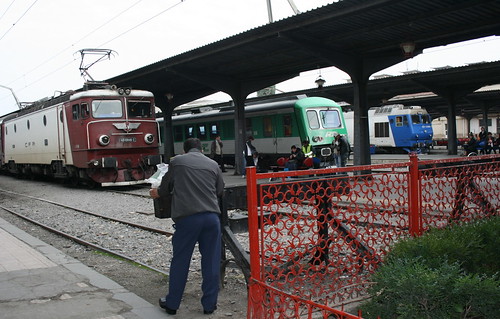
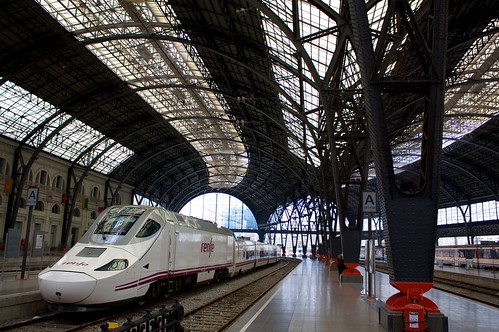
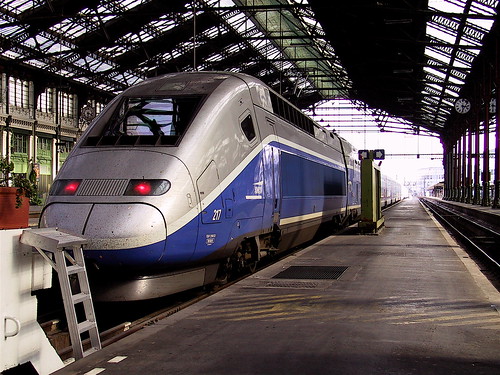
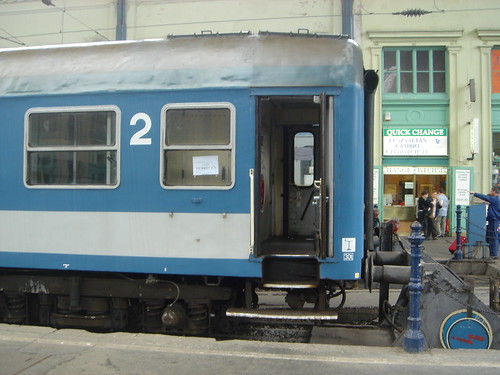

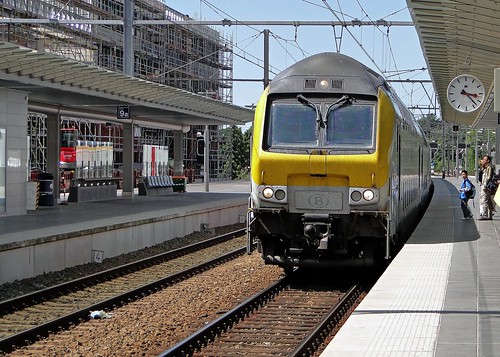
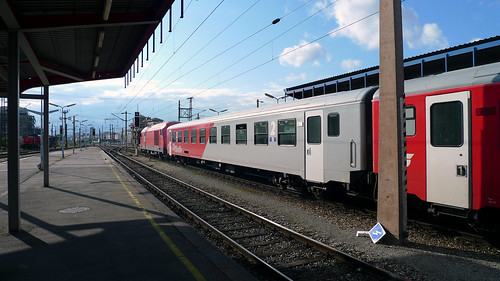

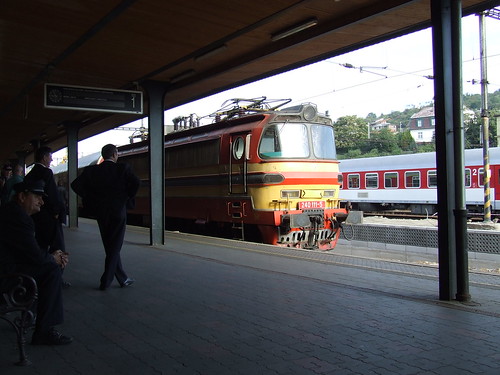
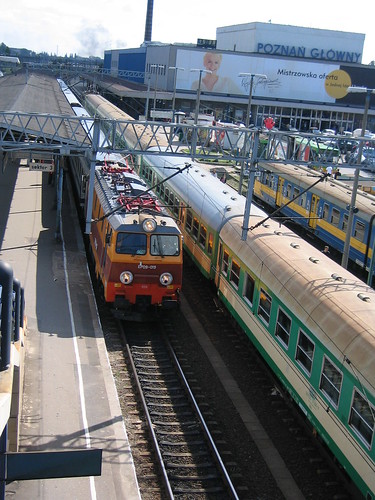
All these train stations are part of my European story, and my Europe definitely is a place I have discovered a lot by train.
PS: What is your Europe? Join #myeurope on Twitter or submit you blog posts through this form.
Thursday, 29 April 2010
My 1000th Euroblog post: Join the "My Europe" experience!

Next week, from May 3rd until May 9th, European bloggers are going to organise a blog carnival titled "This is My Europe" - and I thought it would be worth dedicating the 1000th post of my own euroblog to announce this here.
Whether you have a blog or not, you can join and write, either by sending us the link to your blog post or by posting your complete article directly on our #myeurope platform, both through this form. It doesn't matter whether you write in English or French, Estonian or Maltese, Russian or Turkish, just write about Your Europe, your thoughts, wishes, ideas, angers...
The team of editors of Bloggingportal.eu is looking forward to your contributions!

I myself have been "Watching Europe" since 1 July 2008 with 1000 blog posts. I found my way into the circle of people blogging about European issues - I call them eurobloggers - through the EU blog directory (not updated anymore) that Nosemonkey had set up and kept updated at the time - I was included around August 2008. Since then, I have stayed around the block.
And believe me: When I started the blog, I didn't think that I would ever reach 1000 posts, especially not in just 22 months.
In the first year of my euroblog, quite some posts have been devoted to my thoughts about Europe and about European blogging, besides my focus on the European Parliament elections. Just some examples:
- What is Europe and why am I writing about it?
- Digging deeper
- Talking to Europe
- The European Dream
- A European blog = A European blogger?
More recently, I tried to explain how my mind became a "European Mind", why I am blogging in English, and I told a story about the strange notion of "Strangers". These are all different kind of reflections on how I perceive Europe, the European Union, and the blogging about both.
But these are just my thoughts on Europe, and I hope many of you will join to tell stories about your Europe, making #myeurope a shared experience of European bloggers and European blogging.
Let's shape the next week into our joint European week 2010 - be part of the experience!
Friday, 23 April 2010
Navigating the Social Media Space: What the EU can learn from Eurocontrol
I wasn't one of those concerned by the recent ash and airspace crisis, which didn't prevent me from noticing the incredible success of Eurocontrol in the social media sphere, especially since many people whom I follow on Twitter were directly and indirectly concerned.
EU institutions apart from the the great people at the European Parliament are very hesitant to move forward in their social media efforts. One of the lucky exceptions these days seems to be EU Careers. But other EU institutions, organisations and sub-units can learn a lot from what Eurocontrol was able to do these days.
Eurocontrol is not an EU institution but a European intergovernmental organisation working on the development of a single European sky. However, it is still a European organisation that has to work with obvious problems such as multilingualism and quite different stakeholders: State and public authorities, larger and smaller businesses and now also individual citizens, all having their own communication styles, working rhythms, and information needs.
Nevertheless, in of the largest airspace crises in the history they were able to manage a huge increase in communications with just one employee - Aurelie Valtat (who has already been interviewed and profiled by El Mundo).
Just one social media communicator - the second team member was stuck in Spain due to the crisis as Aurelie told me five minutes after I asked her the question on Twitter earlier today - was able to connect both to professional organisations as well as to individual citizens with their individual problems. She transmitted both official information coming from inside Eurocontrol and from relevant national authorities but she was also quickly answering diverse questions coming directly from citizens and stakeholders on Twitter and on Facebook.
On Mashable, Shashank Nigam qualified the work of Eurocontrol as "probably the best effort [he had] seen in aviation crisis management through social media". And the BBCblog concluded that the success of Eurocontrol's communication effort came because:
- They were open to conversation
- They were quick with answers
- They had a loud & clear communication
- They were consequent in hashtags
- They sounded like a person
- They were nice in the right way
In the meantime, the Twitter account of Eurocontrol has over 7300 followers (after 300 before the crisis according to El Mundo) and the Facebook page has 3200 "Likes", a base that they will be able to use for communication when the crisis is over but also whenever a new crisis may arise.
The combination of first-hand knowledge (i.e. working within the institution) and the ability to interact with a diverse public seems to be a major asset for social media communication of institutions. It is also trust in an employee (or several) to handle the communication efforts in the name of the institution, being allowed to answer without hierarchic authorisation of every little answer and thus being able to react at the speed of social communication, not of institutional communication.
And Eurocontrol also had the ability to work only in English, relying on the linguistic capabilities of followers and translation efforts of major stakeholders and of the social web that is able to get message translated into any language when needed, as we have seen in our Bloggingportal.eu experiment recently.
EU institutions should study what Eurocontrol and Aurelie Valtat - a single qualified and talented employee - were able to do during these days, how much their image profited from the way they were handling communications in this crisis, and how much added value European public institutions can have for citizens and for other stakeholders if they employ the right social communications strategies with the right people in the right way.
Picture: © anguskirk / CC BY-NC-ND 2.0
Saturday, 20 March 2010
Radio music. Newspaper. Fresh coffee.
Starting the weekend with radio music, the newspaper, and a big cup of black coffee.
Good morning, Europe!
PS.: My reading recommendation for the weekend are the panel presentations (panel 1 & 2) from this European Defence Agency conference last month - a pretty clear view at where the EU is in terms of military capabilities right now.
Good morning, Europe!
PS.: My reading recommendation for the weekend are the panel presentations (panel 1 & 2) from this European Defence Agency conference last month - a pretty clear view at where the EU is in terms of military capabilities right now.
Wednesday, 24 February 2010
Classic travel through Europe on Asian fingers
Just back from a classic music travel through Europe riding on the fingers of an Asian superstar in the Berliner Philharmonie.
The travel started in Germany, continued to Catalonia (Spain), then passed by Russia and then ended at a 200th birthday party in Poland with a lot of French and some British friends invited.
And so not to leave you with nothing but plain words, here is part of what I have heard today played by a piano superstar of the 20th century:
The travel started in Germany, continued to Catalonia (Spain), then passed by Russia and then ended at a 200th birthday party in Poland with a lot of French and some British friends invited.
And so not to leave you with nothing but plain words, here is part of what I have heard today played by a piano superstar of the 20th century:
Sunday, 14 February 2010
Saturday night. Berlin. Europe.
Starting the evening with Russian vodka cocktails in a Georgian restaurant in the western part of Berlin.
Continuing the night with British cider in the eastern part of the city.
Talking with a Polish about marriage.
Listening a German talk about his ex-girlfriend working in Spain for several months every year.
Discussing with an Italian who lives in Berlin about democracy in Italy, the changes the Lisbon treaty will bring to the EU (and why the death penalty will not come back), and the difficulties to find academic work.
Passing a large group of French on the way back home.
Saturday, 13 February 2010
(Not) Welcome
I admit that it is too easy to forget those who are among us but who are still excluded.
Haven't come out of a film feeling this guilty and disturbed for a while - so if you can, please watch "Welcome"!
Haven't come out of a film feeling this guilty and disturbed for a while - so if you can, please watch "Welcome"!
Sunday, 10 January 2010
Yourope on ARTE: Review of the first broadcast
Yourope, the second new Europe-and-the-web format of ARTE (on ARTE+7) has everything I expected from "The Blogger" which I have just criticised.
26 minutes definitely worth watching!
26 minutes definitely worth watching!
Thursday, 31 December 2009
Kazakhstan leading the OSCE in 2010 (updated)
In 2010, Kazakhstan under President Nazarbayev will chair the OSCE, the Organisation for Security and Cooperation in Europe including 56 European, Central Asian and some other countries, taking over the presidency from Greece.
And this is what Human Rights Watch told about freedom of expressions in its December 2008 report titled "An Atmosphere of Quiet Repression:
In one of the articles of this issue, Freedom House programme manager Jeff Goldstein asks a question that I find quite relevant:
It is good that for the first time a former Soviet Union country takes over the presidency, but Kazakhstan will have to prove that they can serve all dimensions of the OSCE, including peace in Europe and the protection of human rights and civil freedoms.
In any case, the Kazakh chairmanship shows that organising human security in Europe is not limited to EU countries, and that joining forces in pan-European organisations has to be possible under the leadership of Western as well as under Eastern European countries (and beyond), a fact many in the EU tend to forget.
Update (01/01/2010): There is now the press release for the start of the Kazakh presidency, and the Chairman-in-office website has also been updated.
And this is what Human Rights Watch told about freedom of expressions in its December 2008 report titled "An Atmosphere of Quiet Repression:
In Kazakhstan, journalists operate in an environment of anxiety, faced with constant intimidating lawsuits and, not infrequently, direct threats to their person. Libel continues to be a criminal, rather than a civil, offense and carries stiff penalties. Even when journalists do not admit to outright self-censorship, they speak privately of the tightly regulated environment and topics they do not dare to cover. Threatening phone calls, visits by the police, and successive lawsuits are common. There are no independent television stations, and websites critical of the government are often blocked by the authorities.Yet let's not just focus on one single dimension. But since I am no expert on Kazakhstan, I should point to last year's special issue of the academic journal Security and Human Rights on the upcoming Kazakh OSCE chairmanchip that is worth reading for anyone interested.
In one of the articles of this issue, Freedom House programme manager Jeff Goldstein asks a question that I find quite relevant:
"The importance of who holds the Chairmanship was brought home during the August 2008 Russian invasion of Georgia, when the Chairman-in-Office, Finnish Foreign Minister Alexander Stubb, travelled to Georgia, met with the parties and strongly criticized Russia’s recognition of South Ossetia and Abkhazia.This is just one of the possible questions to be asked, and I suppose that the next year will be a very interesting year for the OSCE.
Would a Kazakhstani Chairman-in-Office have done the same?"
It is good that for the first time a former Soviet Union country takes over the presidency, but Kazakhstan will have to prove that they can serve all dimensions of the OSCE, including peace in Europe and the protection of human rights and civil freedoms.
In any case, the Kazakh chairmanship shows that organising human security in Europe is not limited to EU countries, and that joining forces in pan-European organisations has to be possible under the leadership of Western as well as under Eastern European countries (and beyond), a fact many in the EU tend to forget.
Update (01/01/2010): There is now the press release for the start of the Kazakh presidency, and the Chairman-in-office website has also been updated.
Thursday, 3 December 2009
The Europe of Fear: The other has to disappear - or be like us
Finally a minister - the Dutch minister for European Affairs Frans Timmermans - who knows to speak, on Europe, on fear of the other, on the world, on the future, everything in 20 minutes:
Tuesday, 20 October 2009
Personal Democracy Forum Europe in Barcelona: I won't come
Update: The critique to Micah at the end of the post regarding my blogging at the PDF Europe blog was based on a misunderstanding which has been sorted out.
PdF Europe in Barcelona.
I won't come. Too expensive (high fee + travel + accommodation). Too much meta-stuff.
Too many speakers that I expect to speak about themselves, about theoretical projects, about thousand things that have been said a thousand times without changing anything.
No visible spirit. Too professional. Not for real people. Thus against the spirit of the personal democracy. Not interesting.
(This is the answer to the Personal Democracy Forum Europe people who asked me via mail whether I would promote the conference - enter into a "promotion partnership" - on my blog and in all my communication, getting 20% reductions for my readers and a free card if I got four tickets sold - which is a sign that the demand cannot be that high and which is a sign of the business-like spirit of the conference that makes it sound like a sterile exercise.)
Tuesday, 8 September 2009
Fuck you, homophobia (not just in Hungary)!
Since this event in Budapest has not passed unnoticed, the following video by Hungarian artists may not pass unnoticed either:
Thursday, 13 August 2009
Tear down the walls
48 years ago the East German regime started to build the Wall.
This wall was the realisation of the largest prison that the world has ever seen. It materialised the walls in the heads and minds, and although this wall was torn down almost 20 years ago, it persists in too many of these heads and minds.
The Wall was the absolute example of a border. Borders are one of the evils that we have created in our history. They are constructions, meant to keep people apart.
Looking from the west, I was born behind the Wall. I would have been kept apart from many of the people I got to know during my life. But I am part of the lucky generation.
When I started to realise the world beyond the Soviet-style building block where I lived 20 years ago, the Wall had already gone.
What I saw was not a united Germany, I saw a united Europe. And I have been growing up with this view, thanks to parents who made use of these new opportunities and shared them with me.
Today, I live in a Union that opens its borders internally but is closed down to the world outside its own borders. 20 years after the Wall - the material representation of the division of Europe - was torn down, Europe is still divided. There are those who are in (i.e. in the EU). And those who are not.
As a former East German, I will continue to fight against these borders, because I want to share what I received, not least because I have plenty to share. I want everyone in. And I am ready to invest myself as much as I can to reach this goal.
48 years ago, the Wall was constructed. 20 years ago, its material representation removed. It is time to remove its immaterial leftovers!
This wall was the realisation of the largest prison that the world has ever seen. It materialised the walls in the heads and minds, and although this wall was torn down almost 20 years ago, it persists in too many of these heads and minds.
The Wall was the absolute example of a border. Borders are one of the evils that we have created in our history. They are constructions, meant to keep people apart.
Looking from the west, I was born behind the Wall. I would have been kept apart from many of the people I got to know during my life. But I am part of the lucky generation.
When I started to realise the world beyond the Soviet-style building block where I lived 20 years ago, the Wall had already gone.
What I saw was not a united Germany, I saw a united Europe. And I have been growing up with this view, thanks to parents who made use of these new opportunities and shared them with me.
Today, I live in a Union that opens its borders internally but is closed down to the world outside its own borders. 20 years after the Wall - the material representation of the division of Europe - was torn down, Europe is still divided. There are those who are in (i.e. in the EU). And those who are not.
As a former East German, I will continue to fight against these borders, because I want to share what I received, not least because I have plenty to share. I want everyone in. And I am ready to invest myself as much as I can to reach this goal.
48 years ago, the Wall was constructed. 20 years ago, its material representation removed. It is time to remove its immaterial leftovers!
Wednesday, 1 July 2009
One year
This blog celebrates its first birthday today.
I could try to extensively summarise and analyse this year and its 638 blog posts. But being self-referential for the sake of talking about myself is not worth the effort.
The only thing to say is that three issues marked this year:
Still, I have to admit that these details have changed me and the way I see Europe, its political projects, and to a certain extend the way I look at myself in this pan-European context. It is hard to describe, but I can feel it.
Right now, I have no idea where this thing will lead me to over the next year, but I had no idea one year ago, either - so why bothering this time!?
I could try to extensively summarise and analyse this year and its 638 blog posts. But being self-referential for the sake of talking about myself is not worth the effort.
The only thing to say is that three issues marked this year:
- The European Parliament elections were the topic of this blog; every fifth article was directly dedicated to them and the topic has captured me enormously over the year.
- The war between Russia and Georgia cut through our lives last summer. Going back to July, I was kind of surprised that I felt the war was coming about one month before it actually started. I wish I would have been proven wrong...
- Obama has been elected President of the United States of America. With him coming into office, an era that has marked me and my generation finally ended: "They said this day would never come."
Still, I have to admit that these details have changed me and the way I see Europe, its political projects, and to a certain extend the way I look at myself in this pan-European context. It is hard to describe, but I can feel it.
Right now, I have no idea where this thing will lead me to over the next year, but I had no idea one year ago, either - so why bothering this time!?
Wednesday, 10 June 2009
Lech Walesa honoured by Berlin mayor
Yesterday, former Solidarity leader Lech Walesa has received the highest honour of the city of Berlin, the Ernst Reuter badge, from Berlin's mayor Klaus Wowereit for his outstanding role in making possible the fall of the Wall in the divided city of Berlin 20 years ago.
I had the possibility participating in the honorary ceremony, and was very curious about what Mr Walesa would say, in particular since his appearance at Libertas has been very controversial in the pre-electoral period.
Starting with his role in Solidarity, making very clear that nothing that happened later on would have happened without this movement which took away the legitimacy from the Communist Party to represent the workers, he came quickly to more recent isues.
Today he spoke very pro-European, going as far as asking to think about a "European state". He promoted common solutions for common problems like building good roads all over Europe, so that "the German Mercedes would not lose a wheel on bumpy roads".
He also pointed out that it is in the interest of Germans that there is work all over Europe, because if not, people might first stop buying German cars and, if out of work for too long, would start a new revolution which would be bad for Europe. It was important for Europe not to fall back into nationalism and discrimination of minorities.
He asked Germany to take a lead in Europe, and he said that Germans were too often not aware of their importance and lacked the chance to fulfil their role. If Germany wasn't interested, he said, Poles would be glad if Germany could hand over to them. If not, Germany would have to march ahead and help to fill words like globalisation with life.
Hadn't there been the Libertas story, his speech would have been really nice. He has a funny style of speaking, very lively and conscious of his importance ("You should invite me more often, I have so much to say."), but he doesn't speak like somebody who has grown up with doing political speeches - he sounds as if he is doing it "from the gut".
In the end, after he had given all his ideas and advice, he concluded:
"Now, that you have given me this honorary badge, you should also listen and follow to what I say."
Smiled, and left the stage.
I had the possibility participating in the honorary ceremony, and was very curious about what Mr Walesa would say, in particular since his appearance at Libertas has been very controversial in the pre-electoral period.
Starting with his role in Solidarity, making very clear that nothing that happened later on would have happened without this movement which took away the legitimacy from the Communist Party to represent the workers, he came quickly to more recent isues.
Today he spoke very pro-European, going as far as asking to think about a "European state". He promoted common solutions for common problems like building good roads all over Europe, so that "the German Mercedes would not lose a wheel on bumpy roads".
He also pointed out that it is in the interest of Germans that there is work all over Europe, because if not, people might first stop buying German cars and, if out of work for too long, would start a new revolution which would be bad for Europe. It was important for Europe not to fall back into nationalism and discrimination of minorities.
He asked Germany to take a lead in Europe, and he said that Germans were too often not aware of their importance and lacked the chance to fulfil their role. If Germany wasn't interested, he said, Poles would be glad if Germany could hand over to them. If not, Germany would have to march ahead and help to fill words like globalisation with life.
Hadn't there been the Libertas story, his speech would have been really nice. He has a funny style of speaking, very lively and conscious of his importance ("You should invite me more often, I have so much to say."), but he doesn't speak like somebody who has grown up with doing political speeches - he sounds as if he is doing it "from the gut".
In the end, after he had given all his ideas and advice, he concluded:
"Now, that you have given me this honorary badge, you should also listen and follow to what I say."
Smiled, and left the stage.
Tuesday, 19 May 2009
European marketing via European blogs: The artist's approach
Writing a blog on European issues seems to attract quite different audiences with very diverse interests.
Today I was contacted by a French artists named Martin Le Chevallier who asked me whether I would be be willing to advertise a piece of art called "The Holy Flag".
Since one of the goals of this blog is to understand the dynamics of the European public sphere, if such a thing exists, and since I was wondering why this blog was regarded as a possible means to promote art, I have asked Martin some questions that were of interest to me.
And he was ready to answer.
Julien: Martin Le Chevallier, we had never spoken or met before, but earlier today you contacted me via email asking whether I would be ready to publicise your latest piece of art, "The Holy Flag". How did you find my blog, why did you decide to contact me, and what were your expectations?
I really had some doubts on the intention behind this piece of art before I researched a little bit on Martin. I have seen enough bizarre things around Europe and the blogosphere that appear ironic but that are actually dead serious, especially when it comes to religion...
But as Martin said: Take a look yourself and comment on this piece of art. And afterwards, don't miss the chance to inform yourself about the atheist bus campaign!
Today I was contacted by a French artists named Martin Le Chevallier who asked me whether I would be be willing to advertise a piece of art called "The Holy Flag".
Since one of the goals of this blog is to understand the dynamics of the European public sphere, if such a thing exists, and since I was wondering why this blog was regarded as a possible means to promote art, I have asked Martin some questions that were of interest to me.
And he was ready to answer.
Julien: Martin Le Chevallier, we had never spoken or met before, but earlier today you contacted me via email asking whether I would be ready to publicise your latest piece of art, "The Holy Flag". How did you find my blog, why did you decide to contact me, and what were your expectations?
Martin Le Chevallier: "The Holy Flag" is the story of a miracle: the apparition of a Christ face on an european flag. A procession brought this relic to the european institutions in Brussels, as a divine sign of the christian identity of Europe. My will was to bring this parodic story out of the artistic circle, to bring it to a more political circle. So I tried to submit it to people involved in the European debate. And going around on the web, I found your blog.Julien: Is this part of a true marketing strategy? Did you also contact other bloggers? Which further means do you use to make yourself and your art known, and what has proven to be the most effective way?
Martin Le Chevallier: I send it to several bloggers. Maybe, it's a kind of marketing. But I'm not sure that putting bottles in the ocean is really efficient! I made a piece about the success strategies: an artistic performance audit. The consulting firm gave me some advices concerning the commercial, mediatic or relational strategies... This can be consulted here: http://www.martinlechevallier.net/english/A_audit.htmlJulien: When I saw "The Holy Flag", I wasn't really sure whether this was the ironic comment of a critical artist or the provocative presentation of religious ideology. Is confusion intended or do you actually want to transport a clear message? What kind of reactions did you get so far? Any surprises?
It seems that the most effective way is to be lucky once in your life. Meeting the right person at the right moment...
Martin Le Chevallier: According to me, it is clearly parodic. But, obviously, it's not! I thought that a such idolatrous approach would the idea of a christian Europe in a quite ridiculous way... But anyone can make up his mind looking at it:Just a clarification regarding the last question:
http://www.martinlechevallier.net/TheHolyJourney.html
I really had some doubts on the intention behind this piece of art before I researched a little bit on Martin. I have seen enough bizarre things around Europe and the blogosphere that appear ironic but that are actually dead serious, especially when it comes to religion...
But as Martin said: Take a look yourself and comment on this piece of art. And afterwards, don't miss the chance to inform yourself about the atheist bus campaign!
Saturday, 16 May 2009
Eurovision Song Contest: Testing Europe-wide elections and tolerating homophobia (with Norway winning)
Okay, this is not really comparable to the European Parliament elections, but I suppose it will get much more attention, and it is not limited to the European Union.
Tonight, the Eurovision Song Contest will take place in Moscow, where today the Gay Pride was broken down by the police.
Congratulations, Russia, you have already won the contest of most tolerant country, when it comes to anti-gay demonstrations. I suppose this is why Russia is member of the Council of Europe.
For the "election" tonight, already 16 countries have been "eliminated" in semi-finals. Imagine this for the EP elections...?!
The final result will be be celebrated for a week, the winner brings fame to his country by bringing the event to her/his capital in the next year. So there is a lot at stake.
And maybe next year, this will be a city where tolerance is not only for those who practice intolerance. May the best win tonight!
Update: Well, it seems like with Norway a country that does not participate in the European Parliament elections but where Gay Prides are not forbidden has won the #ESC. What a fairy tale!
Tonight, the Eurovision Song Contest will take place in Moscow, where today the Gay Pride was broken down by the police.
Congratulations, Russia, you have already won the contest of most tolerant country, when it comes to anti-gay demonstrations. I suppose this is why Russia is member of the Council of Europe.
For the "election" tonight, already 16 countries have been "eliminated" in semi-finals. Imagine this for the EP elections...?!
The final result will be be celebrated for a week, the winner brings fame to his country by bringing the event to her/his capital in the next year. So there is a lot at stake.
And maybe next year, this will be a city where tolerance is not only for those who practice intolerance. May the best win tonight!
Update: Well, it seems like with Norway a country that does not participate in the European Parliament elections but where Gay Prides are not forbidden has won the #ESC. What a fairy tale!
Subscribe to:
Posts (Atom)

