
I had my doubts over the Kazakh OSCE presidency, but I actually didn't think that they would go as far as quasi-censoring the OSCE Parliamentary Assembly.
That is a huge fail, and the European Union member states in the OSCE should clearly address this!
Showing posts with label OSCE. Show all posts
Showing posts with label OSCE. Show all posts
Wednesday, 19 May 2010


Friday, 7 May 2010
Joe Biden proposes OSCE reform
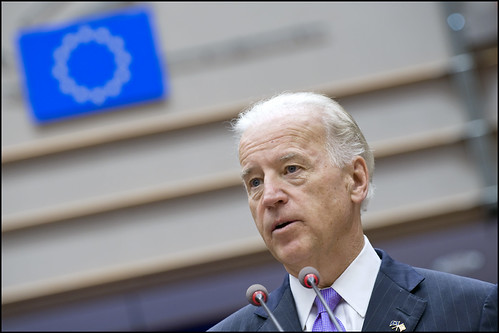
The vice president of the United States has published his proposal for OSCE reform - the US is a member of the OSCE - in the International Harald Tribune, a proposal which sound a little like a reaction to the Russian position, and may be kind of the US proposal for the "Corfu Process".
Different to Russian foreign minister Lavrov, Biden doesn't propose that OSCE takes over the functions of NATO to provide hard security on the European continent. That is no surprise, to be honest. To the contrary, he underlines that there is "the right of all countries to choose their own alliances freely" which is a clearly against Russian demands that NATO should not be enlarged towards the east.
What Biden proposes is a "OSCE Crisis Prevention Mechanism" that seems to be mainly a conclusion from the Russian-Georgian war and it is definitely a much smaller reform proposal than what Russia is envisaging.
I even have difficulties to see the difference to what OSCE already does today, for instance in the cases of Nagorno Karabakh (a frozen conflict between Azerbaijan and Armenia), Transnistria (a breakaway region of Moldova) or regarding the tensions between Turkey and Armenia.
So now we kind of have positions from Russia and from the USA - will we get an official EU position this year or while they try to wait for the Lithuanian OSCE presidency next year...?
Picture: © european_parliament / CC BY-NC-ND 2.0
Monday, 3 May 2010
Legal Leaks & Access to public information in OSCE countries
The OSCE media freedom representative Dunja Mijatovic has announced the start of a new platform named "Legal Leaks" providing a toolkit for access to information held by public authorities in different European countries.
Thursday, 29 April 2010
Lavrov's visions for the Greater Europe
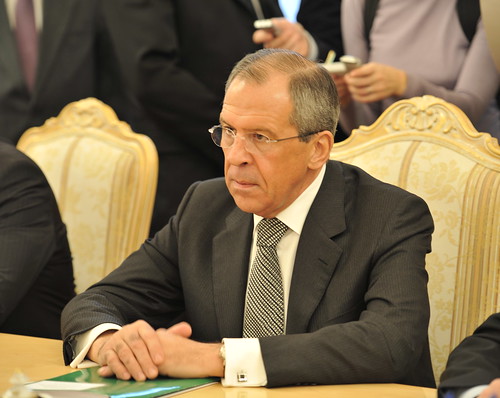
The speech is pretty long and loaded with history*, but there are a number of important political points that come up in the last third.
Lavrov repeats, directly and indirectly, what is the Russian position for years on what he calls "Greater Europe", a Europe that includes Russia and other non-EU member states of the Council of Europe as well as (some?) countries that are members of the OSCE.
A short summary on how I interpret the Russian position:
The Russian government wants that the Council of Europe takes on the "soft" issues into which he includes social and economic well-being, intercultural dialogue and a little bit of human rights. Like an intergovermental European Union light, just with Russia as a member state.
And the OSCE should become the organisation that deals with hard, military security, replacing NATO and getting rid of the OSCE's elements that promote democracy and human rights. Since the other OSCE members are not happy about this, they have directed these discussions into the so-called "Corfu Process".
In both organisations, Russia is trying to play down the roles of human rights and democratic freedoms. It is remarkable that in front of an organisation like the Council of Europe which has the European Convention on Human Rights as one its basic documents, Lavrov mentions the term "human rights" only three times (plus one time "rights") while stressing the issue of "security" 20 times throughout the speech.
And he doesn't even mention once the European Court of Human Rights, which belongs to the Council of Europe and has more than once ruled on severe human rights violations in Russia.
There are three particular quotes that caught my attention.
The first one:
"[W]hy do not we encourage in the context of the Corfu process all the OSCE members to adhere to the law of the Council of Europe?"This is a very strange proposal given that the OSCE countries that are not members of the Council of Europe are either definitely non-European (like the USA) or they clearly do not respect the values of the Council of Europe - human rights, democracy, and the rule of law - (like Belarus, the Central Asian countries, the Vatican).
This proposal is thus pretty non-sense and seems to be a position that Russia just takes to counterbalance the rather hesitant position that the EU and the USA have on its proposals regarding the OSCE reform. Russia proposes to "outsource" the human issues away from the OSCE to strengthen its proposal to make the OSCE a pure hard security or defence organisation.
And the second quote is clearly a critique to the European Union countries (27 of the 47 Council of Europe members are EU countries) that want the Council of Europe to focus on its core tasks as defined by the last Summit in Warsaw in 2005:
"The proposals to diminish the mandate and competence of our Organization are inadmissible, as well as the attempts to limit its independence, transform the Council of Europe into a subsidiary body of the other European structures. The Strasburg Organization must be the leading European lawmaker in the proper sense of the word."However, Lavrov finishes with a note that I could sign without problems, except for the doubt that the Council of Europe can actually deliver this vision:
"Owing to a more effective Council of Europe, our continent will have every chance to become truly integrated space with human rights promoted according to unified standards, where every citizen of the Greater Europe would benefit from real mobility realized in the free movement of ideas and people. It is quite hard to understand that the "visa iron curtain" is drawn, unlike during the Cold War, on the opposite side."In summary, the speech is in clear continuity of the Russian position with just some refinement and adaptation in the argumentation that reflect discussions in other fora - a sign that we won't see much development in the political landscape of the "Greater Europe" in the near future.
* PS.: Lavrov was reading really quickly - the poor translator... (see the video of the speech).
Picture: © utenriksdept / CC BY-ND 2.0
Friday, 26 February 2010
OSCE: Kazakhstan's focus on Afghanistan is just distraction
The 2010 Kazakh OSCE presidency just has applauded the organisation's focus on Afghanistan.
And although the OSCE engagement with Afghanistan is not new, this press release is part of an obvious strategy:
By refocussing the attention and resources of the pan-European organisation to the political and military problems outside its actual scope - Afghanistan is not a member of the OSCE - countries like Kazakhstan with obvious human rights problems can distract from these issues.
Countries like Russia, that is trying for years to re-organise the OSCE to get rid of the disturbing issues like free elections or human right, Belarus or the Central Asian countries surely also agree with everything that makes the work of ODIHR less important.
But even outside these rights-oriented questions, there are still many security and co-operation problems within the Eurasian region, and the OSCE should focus its resources to these issues before thinking about something that is far beyond its competence and problem-solving ability.
In short: It is wrong that the OSCE looks outside its borders as long as there are so many problems within its member countries, and I can see nothing but distraction in the strategy of the Kazakh presidency that hasn't shown any particular interest in human and civil rights topics over the last two months.
And although the OSCE engagement with Afghanistan is not new, this press release is part of an obvious strategy:
By refocussing the attention and resources of the pan-European organisation to the political and military problems outside its actual scope - Afghanistan is not a member of the OSCE - countries like Kazakhstan with obvious human rights problems can distract from these issues.
Countries like Russia, that is trying for years to re-organise the OSCE to get rid of the disturbing issues like free elections or human right, Belarus or the Central Asian countries surely also agree with everything that makes the work of ODIHR less important.
But even outside these rights-oriented questions, there are still many security and co-operation problems within the Eurasian region, and the OSCE should focus its resources to these issues before thinking about something that is far beyond its competence and problem-solving ability.
In short: It is wrong that the OSCE looks outside its borders as long as there are so many problems within its member countries, and I can see nothing but distraction in the strategy of the Kazakh presidency that hasn't shown any particular interest in human and civil rights topics over the last two months.
Thursday, 31 December 2009
Kazakhstan leading the OSCE in 2010 (updated)
In 2010, Kazakhstan under President Nazarbayev will chair the OSCE, the Organisation for Security and Cooperation in Europe including 56 European, Central Asian and some other countries, taking over the presidency from Greece.
And this is what Human Rights Watch told about freedom of expressions in its December 2008 report titled "An Atmosphere of Quiet Repression:
In one of the articles of this issue, Freedom House programme manager Jeff Goldstein asks a question that I find quite relevant:
It is good that for the first time a former Soviet Union country takes over the presidency, but Kazakhstan will have to prove that they can serve all dimensions of the OSCE, including peace in Europe and the protection of human rights and civil freedoms.
In any case, the Kazakh chairmanship shows that organising human security in Europe is not limited to EU countries, and that joining forces in pan-European organisations has to be possible under the leadership of Western as well as under Eastern European countries (and beyond), a fact many in the EU tend to forget.
Update (01/01/2010): There is now the press release for the start of the Kazakh presidency, and the Chairman-in-office website has also been updated.
And this is what Human Rights Watch told about freedom of expressions in its December 2008 report titled "An Atmosphere of Quiet Repression:
In Kazakhstan, journalists operate in an environment of anxiety, faced with constant intimidating lawsuits and, not infrequently, direct threats to their person. Libel continues to be a criminal, rather than a civil, offense and carries stiff penalties. Even when journalists do not admit to outright self-censorship, they speak privately of the tightly regulated environment and topics they do not dare to cover. Threatening phone calls, visits by the police, and successive lawsuits are common. There are no independent television stations, and websites critical of the government are often blocked by the authorities.Yet let's not just focus on one single dimension. But since I am no expert on Kazakhstan, I should point to last year's special issue of the academic journal Security and Human Rights on the upcoming Kazakh OSCE chairmanchip that is worth reading for anyone interested.
In one of the articles of this issue, Freedom House programme manager Jeff Goldstein asks a question that I find quite relevant:
"The importance of who holds the Chairmanship was brought home during the August 2008 Russian invasion of Georgia, when the Chairman-in-Office, Finnish Foreign Minister Alexander Stubb, travelled to Georgia, met with the parties and strongly criticized Russia’s recognition of South Ossetia and Abkhazia.This is just one of the possible questions to be asked, and I suppose that the next year will be a very interesting year for the OSCE.
Would a Kazakhstani Chairman-in-Office have done the same?"
It is good that for the first time a former Soviet Union country takes over the presidency, but Kazakhstan will have to prove that they can serve all dimensions of the OSCE, including peace in Europe and the protection of human rights and civil freedoms.
In any case, the Kazakh chairmanship shows that organising human security in Europe is not limited to EU countries, and that joining forces in pan-European organisations has to be possible under the leadership of Western as well as under Eastern European countries (and beyond), a fact many in the EU tend to forget.
Update (01/01/2010): There is now the press release for the start of the Kazakh presidency, and the Chairman-in-office website has also been updated.
Sunday, 23 August 2009
Why is the OSCE involved in Afghan matters?
I just saw this press release of the OSCE.
Why does the OSCE need to engage in the training of Afghan custom officers? Isn't there enough to do within the member states of the OSCE, ranging from the ever continuing Russian-Georgian conflict and other frozen conflicts like the one in Nagorno-Karabakh, close-to-fraud elections, and unclear definitions of the actual goals of the organisation?
I saw in the press release that these are extra-budgetary activities, but it still means that the OSCE administrative body is involved in these Afghanistan-related activities, that time will be spent on the diplomatic level to discuss these things, and that this will distract from more important intra-OSCE questions.
If you ask me, the OSCE should not involve in Afghan matters, not even the training of their custom officials!
Why does the OSCE need to engage in the training of Afghan custom officers? Isn't there enough to do within the member states of the OSCE, ranging from the ever continuing Russian-Georgian conflict and other frozen conflicts like the one in Nagorno-Karabakh, close-to-fraud elections, and unclear definitions of the actual goals of the organisation?
I saw in the press release that these are extra-budgetary activities, but it still means that the OSCE administrative body is involved in these Afghanistan-related activities, that time will be spent on the diplomatic level to discuss these things, and that this will distract from more important intra-OSCE questions.
If you ask me, the OSCE should not involve in Afghan matters, not even the training of their custom officials!
Saturday, 8 August 2009
One year ago: Russia and Georgia at war (supplemented)
One year ago, Russia and Georgia were at war - yet another war on the European continent, Europeans killing Europeans, because big men with big balls needed to compare the lengths of their penises.
This conflict between two very different but in a sense still very similar nations - both are marked by a lack of democratic culture and their politics are built upon nationalism and false assumptions about the need for power - showed us Europeans that the phantom of war has not disappeared from our shores, that the shadow of distrust and hate has not been washed away from our lands, and that power of evil remains strong.
Putin and Medvedev as well as Saakashvilli deserve our full disrespect for what they did; they are a shame for the European continent and for the values that their countries have subscribed to as members of the Council of Europe and the OSCE!
We also shouldn't forget that this is not just about politics, it is about human beings who have been killed, it is about families disrupted, about injured souls, about lives filled with fear and anger. War is not about big man with big balls, it is about man-made weapons cutting human bodies into pieces and burning human lives into ashes.
Now, one year later, tensions are rising again in the region, although not looking as dangerous as a year ago. It makes me angry seeing this, and so I will let some else speak more calmly on the matter.
Alexander Stubb, former MEP and now Finnish foreign minister, has been the chairman of the OSCE last year and was blogging in English when he went to the region.
Yesterday, a year later, Stubb has published an article on his blog looking back and into the future:
Still, I hope for the people in the region, as well as for the whole of Europe, that our European politicians and diplomats, but even more the responsible actors in the countries and the region will be able to secure peace on our continent - and that all of you remain aware that what we have managed to create with the EU is not self-evident, but has to be defended every day and minute in order to live in peace and relative prosperity as we do right now.
Any alternative is nothing but frightening...!
Supplement: Carl Bildt, Swedish foreign minister, now co-responsible for the Swedish EU Council Presidency, and one year ago chairman of the Council of Ministers of the Council of Europe, has also written about the first "birthday" of the war.
PS.: One year ago, this blog was still very young, and so the Russian-Georgian crisis pretty much dominated its early times as you can see in a number of articles from last year:
This conflict between two very different but in a sense still very similar nations - both are marked by a lack of democratic culture and their politics are built upon nationalism and false assumptions about the need for power - showed us Europeans that the phantom of war has not disappeared from our shores, that the shadow of distrust and hate has not been washed away from our lands, and that power of evil remains strong.
Putin and Medvedev as well as Saakashvilli deserve our full disrespect for what they did; they are a shame for the European continent and for the values that their countries have subscribed to as members of the Council of Europe and the OSCE!
We also shouldn't forget that this is not just about politics, it is about human beings who have been killed, it is about families disrupted, about injured souls, about lives filled with fear and anger. War is not about big man with big balls, it is about man-made weapons cutting human bodies into pieces and burning human lives into ashes.
Now, one year later, tensions are rising again in the region, although not looking as dangerous as a year ago. It makes me angry seeing this, and so I will let some else speak more calmly on the matter.
Alexander Stubb, former MEP and now Finnish foreign minister, has been the chairman of the OSCE last year and was blogging in English when he went to the region.
Yesterday, a year later, Stubb has published an article on his blog looking back and into the future:
[...] The war in Georgia shattered the European security policy configuration also at a more general level. It created tensions and persistent insecurity. [...]What Stubb writes doesn't look too encouraging, it doesn't seem that there has been much progress, and it shows the slow speed with which diplomacy moves in such cases, spending time on useless words and declarations, trying to avoid saying what needed to be said.
What does the situation in Georgia look like now on 080809?
Firstly, domestic turmoil in the country is continuing. [...] Secondly, the security situation in the conflict regions is alarming. [...]
The most significant step forward to date is the joint incident prevention and response mechanism, which involves regular meetings at local level to discuss incidents and their prevention. However, there have been stumbling blocks in its implementation. [...]
What should the EU then do to preserve stability and help Georgia out of the woods at some phase?
I see that political intervention can take place on three tracks. 1) The cease-fire must be monitored effectively and reinforced by international presence in the entire territory of Georgia. 2) The peace process must be supported and preconditions must be sought for a gradual restoration of confidence and concrete steps forward. 3) The EU must strengthen its overall support for Georgia. This will take place in the framework of the policy of the Eastern Partnership. [...]
Still, I hope for the people in the region, as well as for the whole of Europe, that our European politicians and diplomats, but even more the responsible actors in the countries and the region will be able to secure peace on our continent - and that all of you remain aware that what we have managed to create with the EU is not self-evident, but has to be defended every day and minute in order to live in peace and relative prosperity as we do right now.
Any alternative is nothing but frightening...!
Supplement: Carl Bildt, Swedish foreign minister, now co-responsible for the Swedish EU Council Presidency, and one year ago chairman of the Council of Ministers of the Council of Europe, has also written about the first "birthday" of the war.
PS.: One year ago, this blog was still very young, and so the Russian-Georgian crisis pretty much dominated its early times as you can see in a number of articles from last year:
- 10 July: Rising tensions in Abkhazia
- 08 August: South Ossetia, Georgia, and Russia heading towards war
- 09 August: Blogosphere coverage of the South Ossetia war
- 09 August: South Ossetia: Poland asks for urgent EU summit
- 10 August: Self-torture: Watching "Russia Today"
- 10 August: Finnish OSCE presidency: Russia cannot be a mediator!
- 11 August: Information war: Georgian ministry "blogging"
- 11 August: The EU's many voices - Kouchner, Stubb, and Bildt
- 12 August: Georgia as single issue for EU Council
- 13 August: EU Council on Georgia: Weak conclusions
- 14 August: That is so 20th century!
- 15 August: Human Rights Watch: Violations from all sides
- 22 August: Alexander Stubb (almost) live
- 24 August: Sarkozy announces urgent EU summit on Georgia
- 25 August: The separatist agenda
- 26 August: Medvedev's vision?
Sunday, 28 June 2009
OSCE remains divided after Corfu informal meeting
The Swedish foreign minister Carl Bildt who will co-lead the EU-Council presidency from Wednesday concludes in his blog - not very surprisingly - that the OSCE remains divided over the concept of security after the informal foreign ministers meeting on Corfu.
The disagreement that one could already see at last year's Helsinki summit is a division mainly between Russia and the EU (plus the USA).
Russia wants to replace NATO by a NATO-like OSCE - which means influence for Russia - that does not care for human rights, democracy, and non-military security issues which seems unacceptable to the Union.
I have doubts that the newly launched "Corfu Process" will change anything, in particular after the continuing division over the Russian-Georgian war in 2008.
The disagreement that one could already see at last year's Helsinki summit is a division mainly between Russia and the EU (plus the USA).
Russia wants to replace NATO by a NATO-like OSCE - which means influence for Russia - that does not care for human rights, democracy, and non-military security issues which seems unacceptable to the Union.
I have doubts that the newly launched "Corfu Process" will change anything, in particular after the continuing division over the Russian-Georgian war in 2008.
Wednesday, 18 February 2009
Authoritarian G2C communication sponsored by OSCE
Sorry, but I just had to laugh about this OSCE seminar organised in Belarus...
Maybe I am cynical, but fostering online government-to-citizen (G2C) communication in an authoritarian state (or a dictatorship as some call it) does not seem priority N° 1 for me.
Maybe I am cynical, but fostering online government-to-citizen (G2C) communication in an authoritarian state (or a dictatorship as some call it) does not seem priority N° 1 for me.
Thursday, 12 February 2009
OSCE representative criticises Czech Republic on media freedom
In an official statement published today, the OSCE Representative on Freedom of the Media, the Hungarian Miklós Haraszti urges the Czech President Vaclav Klaus to veto the new draft criminal code just passed by the Czech parliament, which according to Harszti will threaten media freedom in the Czech Republic.
Quoting from the statement:
For me, it is unacceptable that the country representing the Council - and thus all 27 member states - sets an example of violating common European values, norms, and standards - so Mr Klaus, stop this law!
Quoting from the statement:
Haraszti objected to the code's provision that could sentence journalists to up to five years in prison and a fine of up to five million crowns for the publication of conversations wiretapped by the police. He also criticized the code for failing to decriminalize defamation.These are quite harsh words against the present EU Council Presidency, and the condemnation by the OSCE representative is very alarming in my ears.
[...]
Haraszti was also critical of the draft law's failure to differentiate between the liability of state officials who leak information and the liability of civilians, including journalists.
[...]
In addition, he expressed disappointment that the Criminal Code missed the unique opportunity to decriminalize defamation during this legislative reform, and argued that such cases should be dealt with in civil, not criminal, courts.
"A 21st-century Criminal Code in Europe should not preserve crimes that have proven to be incompatible with the modern concept of free speech," Haraszti warned. "They are also at odds with the jurisdiction of the European Court of Human Rights, and even with the practice of the Czech Constitutional Court."
For me, it is unacceptable that the country representing the Council - and thus all 27 member states - sets an example of violating common European values, norms, and standards - so Mr Klaus, stop this law!
Monday, 9 February 2009
Why just Georgia? - On the refocussing of European institutions
Sorry, but when I read declarations like this one from the Greek OSCE presidency I ask myself why European institutions seem to over-focus on Georgia.
Diplomacy prefers to come after the crisis, then spends millions of Euros on post-treatment, shortens money for other regions (what about the Western Balkans, Ukraine, Moldova, Nagorno Karabakh...?) and wonders why the situation in those forgotten countries degrades soon afterwards.
Turning every Euro-Cent for preventive measures and wasting large sums on worthless post-conflict activities is just stupid, but almost nobody seems to notice...
Diplomacy prefers to come after the crisis, then spends millions of Euros on post-treatment, shortens money for other regions (what about the Western Balkans, Ukraine, Moldova, Nagorno Karabakh...?) and wonders why the situation in those forgotten countries degrades soon afterwards.
Turning every Euro-Cent for preventive measures and wasting large sums on worthless post-conflict activities is just stupid, but almost nobody seems to notice...
Friday, 30 January 2009
Nagorno Karabakh: Presidents of Armenia and Azerbaijan meet
According to a press release of the Organisation for Security and Co-operation in Europe (OSCE), the presidents of Armenia and Azerbaijan have met on Tuesday to discuss further steps of the settlement of the conflict over the breakaway region Nagorno Karabakh.
This is the continuation of the positive developments reported in November, but the content of the press release does not look like any major steps forward have been made - not mentioning any concrete steps sounds like diplomatic stalemate, although it is already a success that both countries meet on their highest level.
This is the continuation of the positive developments reported in November, but the content of the press release does not look like any major steps forward have been made - not mentioning any concrete steps sounds like diplomatic stalemate, although it is already a success that both countries meet on their highest level.
Wednesday, 7 January 2009
Greece with foreign minister Dora Bakoyannis takes over the OSCE chairmanship - updated
Since January, 1, Greece has taken over the chairmanship of the Organisation for Security and Co-operation (OSCE) from the Finns.
Their foreign minister Alexander Stubb has been blogging several times during the Finnish chairmanship, notably during the Russian-Georgian crisis, which called my attention earlier this year. I doubt that Dora Bakoyannis, number 78 on the Forbes list of the most powerful women and first female foreign minister of Greece, will get the attention of the European blogosphere with extensive online appearance.
According to the OSCE press release - which is aggressively general - the most important issue seems to be Georgia:
The next OSCE presidency (2010) will be held by... Kazakhstan, a nation that ranks particularly low in all fields of democracy and good governance, according to the 2008 Freedom House "Countries in Transit" report.
Update (22 January 2009)
Oops, have I been deliciously tagged by Ms Bakoyannis personnally today...?
Their foreign minister Alexander Stubb has been blogging several times during the Finnish chairmanship, notably during the Russian-Georgian crisis, which called my attention earlier this year. I doubt that Dora Bakoyannis, number 78 on the Forbes list of the most powerful women and first female foreign minister of Greece, will get the attention of the European blogosphere with extensive online appearance.
According to the OSCE press release - which is aggressively general - the most important issue seems to be Georgia:
In particular, we intend to proceed with a swift and co-ordinated course of action to try and find a compromise arrangement that would allow the Organization to continue its activities throughout Georgia, in order to assist all efforts for the peaceful resolution of the crisis.The last time we have heard about the OSCE was in early December, when the Russian proposal to establish a new pan-European security strategy was rejected by the rest of the OSCE countries. The only remark in the press release is that Greece will "build on the discussions" at the ministerial OSCE Council in Helsinki, which means that on the diplomatic level they cannot bury the initiative but it won't come up politically.
The next OSCE presidency (2010) will be held by... Kazakhstan, a nation that ranks particularly low in all fields of democracy and good governance, according to the 2008 Freedom House "Countries in Transit" report.
Update (22 January 2009)
Oops, have I been deliciously tagged by Ms Bakoyannis personnally today...?
Monday, 8 December 2008
No new pan-European security strategy
Meeting last week in Helsinki, the foreign ministers of the Organisation for Security and Cooperation in Europe (OSCE) have disagreed with the Russian proposal to create a new European security strategy (i.e. organisation).
In fact, I am not surprised about this decision, and not surprised that the Russian foreign minister Lavrov is described as "angry" during his closing remarks. In general, this proposal is not new, and has not come with Medvedev - I have heard about this already in 2006, and I suppose this Russian idea is even older.
In general, I agree with the Russian approach to discuss about a pan-European security, a non-divisive system that overcomes the cold-war NATO (although reformed) and the logic of East and West on a continent that should be united, not just for "historical" reasons but because of the need for a common future.
However, the Russian move can also be interpreted as a move to weaken the OSCE's (formerly CSCE) influence in the fields of democracy and human rights, namely through its Office for Democratic Institutions and Human Rights (ODIHR), together with the Council of Europe one of the two main pillars of pan-European human rights protection instruments.
It is also a move to slow down the European ability to react, because within a joint European security space, Moscow would have a lot of influence and, as in other organisations, the possibility to decelerate necessary moves whenever it deems appropriate. A joint European security space with a non-democratic Russia would thereby be not less conflictual, less insecure, or less inappropriate than the present system of security.
An undemocratic Russia remains a risk for European security in general, and even a basically correct move to discuss pan-European security cannot hide this fact. The OSCE is correct in including democracy and human rights into its human security concept, and any step towards a simple understanding of security as a military concept just reveals the militaristic thinking of Russian elites stuck in old-time great power ambitions instead of modern-times co-operative efforts.
Which still doesn't mean that NATO is good....
I therefore agree with the basic rhetoric of the Russian initiative, but I don't believe neither in the right motives nor in any positive outcomes. In this regard, the pan-European reactions have been correct.
In fact, I am not surprised about this decision, and not surprised that the Russian foreign minister Lavrov is described as "angry" during his closing remarks. In general, this proposal is not new, and has not come with Medvedev - I have heard about this already in 2006, and I suppose this Russian idea is even older.
In general, I agree with the Russian approach to discuss about a pan-European security, a non-divisive system that overcomes the cold-war NATO (although reformed) and the logic of East and West on a continent that should be united, not just for "historical" reasons but because of the need for a common future.
However, the Russian move can also be interpreted as a move to weaken the OSCE's (formerly CSCE) influence in the fields of democracy and human rights, namely through its Office for Democratic Institutions and Human Rights (ODIHR), together with the Council of Europe one of the two main pillars of pan-European human rights protection instruments.
It is also a move to slow down the European ability to react, because within a joint European security space, Moscow would have a lot of influence and, as in other organisations, the possibility to decelerate necessary moves whenever it deems appropriate. A joint European security space with a non-democratic Russia would thereby be not less conflictual, less insecure, or less inappropriate than the present system of security.
An undemocratic Russia remains a risk for European security in general, and even a basically correct move to discuss pan-European security cannot hide this fact. The OSCE is correct in including democracy and human rights into its human security concept, and any step towards a simple understanding of security as a military concept just reveals the militaristic thinking of Russian elites stuck in old-time great power ambitions instead of modern-times co-operative efforts.
Which still doesn't mean that NATO is good....
I therefore agree with the basic rhetoric of the Russian initiative, but I don't believe neither in the right motives nor in any positive outcomes. In this regard, the pan-European reactions have been correct.
Friday, 22 August 2008
Alexander Stubb (almost) live
For most of you reading this blog (and therefore reading many more) this will not be real news, but all the rest should have a look at the blog of Finnish Foreign Minister Alexander Stubb.
In this function, he is now Chairman-in-Office of the Organisation for Security and Cooperation in Europe (OSCE), and he is blogging (almost) live from his efforts and activities in and for the region. And the way he does it is quite something - I am not aware that anyone in a similar position has given comparable personal accounts [following the comment from Grahnlaw, I should add: in English language] out of such a crisis where s/he is directly involved.
And although it is nothing but a coincidence, it is striking that a Finnish chairman of the OSCE is in charge of preventing a new hot "Cold War":
The predecessor of the organisation, the Conference for Security and Cooperation in Europe (CSCE, founded in 1973) has led to the famous Helsinki Accords in 1975, which many scholars see as one of the major steps towards the end of the real "Cold War"...
In this function, he is now Chairman-in-Office of the Organisation for Security and Cooperation in Europe (OSCE), and he is blogging (almost) live from his efforts and activities in and for the region. And the way he does it is quite something - I am not aware that anyone in a similar position has given comparable personal accounts [following the comment from Grahnlaw, I should add: in English language] out of such a crisis where s/he is directly involved.
And although it is nothing but a coincidence, it is striking that a Finnish chairman of the OSCE is in charge of preventing a new hot "Cold War":
The predecessor of the organisation, the Conference for Security and Cooperation in Europe (CSCE, founded in 1973) has led to the famous Helsinki Accords in 1975, which many scholars see as one of the major steps towards the end of the real "Cold War"...
Monday, 11 August 2008
The EU's many voices - Kouchner, Stubb, and Bildt
Rarely can we see all three major European regional institutions - the European Union (EU), the Organisation for Security and Cooperation in Europe (OSCE), and the Council of Europe (CoE) - united in action.
And although some see the EU move only "at its usual speed", now the not so improbable coincidence* that all presidencies of the European regional institutions are in the hands of European Union countries has lead to a situation where the one voice of the EU is effectively heard out of several mouths.
Bernard Kouchner of France has spoken for the French EU-Council Presidency, Alexander Stubb of Finland has found clear words as the Chairman-in-Office of the OSCE, and now Carl Bildt, Foreign Minister of Sweden, and Chairman of the Council of Ministers of the Council of Europe , has issued a statement that is astonishingly clear in diplomatic terms. All three are present in Georgia and try to mediate for peace - peace not only for Georgia, its breakaway regions, and Russia, but for Europe as a whole.
This is a rather good situation, because, although coming from EU and non-EU organisations, the general position of the European Union is amplified and clearly audible all over the continent, especially in Moscow and Tbilisi.
And this shows that we should not be looking for a European Union that speaks with just one single voice. No, we should be longing for a European Union where many voices speak in the same direction, drowning out the many other regional and global voices that herald their messages of hatred, war, and ignorance of human rights.
A joint statement from an emergency EU Council meeting will maybe be a sign of unity, but it will, as so many times before, just express the lowest common denominator then promoted by just one country - the Presidency - instead of stronger voices echoing from all over the Union.
Maybe, today's situation is much better for the European Union than it will be after a Council meeting...
----------
*27 out 47 countries in the CoE and 27 out of 56 countries in the OSCE are EU countries .
And although some see the EU move only "at its usual speed", now the not so improbable coincidence* that all presidencies of the European regional institutions are in the hands of European Union countries has lead to a situation where the one voice of the EU is effectively heard out of several mouths.
Bernard Kouchner of France has spoken for the French EU-Council Presidency, Alexander Stubb of Finland has found clear words as the Chairman-in-Office of the OSCE, and now Carl Bildt, Foreign Minister of Sweden, and Chairman of the Council of Ministers of the Council of Europe , has issued a statement that is astonishingly clear in diplomatic terms. All three are present in Georgia and try to mediate for peace - peace not only for Georgia, its breakaway regions, and Russia, but for Europe as a whole.
This is a rather good situation, because, although coming from EU and non-EU organisations, the general position of the European Union is amplified and clearly audible all over the continent, especially in Moscow and Tbilisi.
And this shows that we should not be looking for a European Union that speaks with just one single voice. No, we should be longing for a European Union where many voices speak in the same direction, drowning out the many other regional and global voices that herald their messages of hatred, war, and ignorance of human rights.
A joint statement from an emergency EU Council meeting will maybe be a sign of unity, but it will, as so many times before, just express the lowest common denominator then promoted by just one country - the Presidency - instead of stronger voices echoing from all over the Union.
Maybe, today's situation is much better for the European Union than it will be after a Council meeting...
----------
*27 out 47 countries in the CoE and 27 out of 56 countries in the OSCE are EU countries .
Sunday, 10 August 2008
Finnish OSCE presidency: Russia cannot be a mediator!
I have been asking for a tougher stand by the Organisation for Security and Cooperation in Europe (OSCE) in a recent post, so I am glad that Alexander Stubb, Finnish foreign minister and currently the man in charge of the rotating OSCE-presidency, has said the following:
Stubb has gone to Georgia together with his French colleague Kouchner, currently responsible for the French EU-Council presidency, in order to mediate in the conflict.
"Russia is at the moment a party in this conflict, not a mediator, and that has to be mirrored when ceasefire and peace talks begin."This is a clear statement towards Moscow, and I think that this more than appropriate!
"It is clear that there is no return to the status quo, to what was."
Stubb has gone to Georgia together with his French colleague Kouchner, currently responsible for the French EU-Council presidency, in order to mediate in the conflict.
Subscribe to:
Posts (Atom)

