
Sometimes EU document titles make me smile. Like this one.
PS: The comments are free to guess what the terms of reference of Russia are.
Showing posts with label Russia. Show all posts
Showing posts with label Russia. Show all posts
Sunday, 30 May 2010


Friday, 7 May 2010
Joe Biden proposes OSCE reform
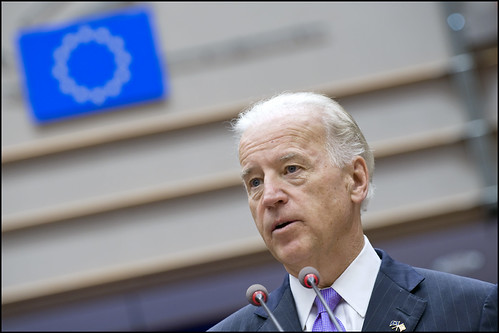
The vice president of the United States has published his proposal for OSCE reform - the US is a member of the OSCE - in the International Harald Tribune, a proposal which sound a little like a reaction to the Russian position, and may be kind of the US proposal for the "Corfu Process".
Different to Russian foreign minister Lavrov, Biden doesn't propose that OSCE takes over the functions of NATO to provide hard security on the European continent. That is no surprise, to be honest. To the contrary, he underlines that there is "the right of all countries to choose their own alliances freely" which is a clearly against Russian demands that NATO should not be enlarged towards the east.
What Biden proposes is a "OSCE Crisis Prevention Mechanism" that seems to be mainly a conclusion from the Russian-Georgian war and it is definitely a much smaller reform proposal than what Russia is envisaging.
I even have difficulties to see the difference to what OSCE already does today, for instance in the cases of Nagorno Karabakh (a frozen conflict between Azerbaijan and Armenia), Transnistria (a breakaway region of Moldova) or regarding the tensions between Turkey and Armenia.
So now we kind of have positions from Russia and from the USA - will we get an official EU position this year or while they try to wait for the Lithuanian OSCE presidency next year...?
Picture: © european_parliament / CC BY-NC-ND 2.0
Thursday, 29 April 2010
Lavrov's visions for the Greater Europe
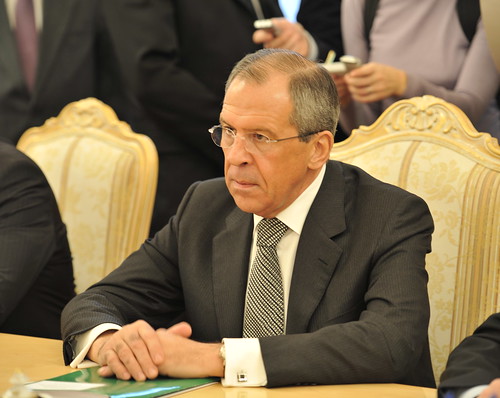
The speech is pretty long and loaded with history*, but there are a number of important political points that come up in the last third.
Lavrov repeats, directly and indirectly, what is the Russian position for years on what he calls "Greater Europe", a Europe that includes Russia and other non-EU member states of the Council of Europe as well as (some?) countries that are members of the OSCE.
A short summary on how I interpret the Russian position:
The Russian government wants that the Council of Europe takes on the "soft" issues into which he includes social and economic well-being, intercultural dialogue and a little bit of human rights. Like an intergovermental European Union light, just with Russia as a member state.
And the OSCE should become the organisation that deals with hard, military security, replacing NATO and getting rid of the OSCE's elements that promote democracy and human rights. Since the other OSCE members are not happy about this, they have directed these discussions into the so-called "Corfu Process".
In both organisations, Russia is trying to play down the roles of human rights and democratic freedoms. It is remarkable that in front of an organisation like the Council of Europe which has the European Convention on Human Rights as one its basic documents, Lavrov mentions the term "human rights" only three times (plus one time "rights") while stressing the issue of "security" 20 times throughout the speech.
And he doesn't even mention once the European Court of Human Rights, which belongs to the Council of Europe and has more than once ruled on severe human rights violations in Russia.
There are three particular quotes that caught my attention.
The first one:
"[W]hy do not we encourage in the context of the Corfu process all the OSCE members to adhere to the law of the Council of Europe?"This is a very strange proposal given that the OSCE countries that are not members of the Council of Europe are either definitely non-European (like the USA) or they clearly do not respect the values of the Council of Europe - human rights, democracy, and the rule of law - (like Belarus, the Central Asian countries, the Vatican).
This proposal is thus pretty non-sense and seems to be a position that Russia just takes to counterbalance the rather hesitant position that the EU and the USA have on its proposals regarding the OSCE reform. Russia proposes to "outsource" the human issues away from the OSCE to strengthen its proposal to make the OSCE a pure hard security or defence organisation.
And the second quote is clearly a critique to the European Union countries (27 of the 47 Council of Europe members are EU countries) that want the Council of Europe to focus on its core tasks as defined by the last Summit in Warsaw in 2005:
"The proposals to diminish the mandate and competence of our Organization are inadmissible, as well as the attempts to limit its independence, transform the Council of Europe into a subsidiary body of the other European structures. The Strasburg Organization must be the leading European lawmaker in the proper sense of the word."However, Lavrov finishes with a note that I could sign without problems, except for the doubt that the Council of Europe can actually deliver this vision:
"Owing to a more effective Council of Europe, our continent will have every chance to become truly integrated space with human rights promoted according to unified standards, where every citizen of the Greater Europe would benefit from real mobility realized in the free movement of ideas and people. It is quite hard to understand that the "visa iron curtain" is drawn, unlike during the Cold War, on the opposite side."In summary, the speech is in clear continuity of the Russian position with just some refinement and adaptation in the argumentation that reflect discussions in other fora - a sign that we won't see much development in the political landscape of the "Greater Europe" in the near future.
* PS.: Lavrov was reading really quickly - the poor translator... (see the video of the speech).
Picture: © utenriksdept / CC BY-ND 2.0
Saturday, 10 April 2010

Thursday, 28 January 2010
Protocol 14 finally ratified
According to Jaanika, the Russian upper chamber has followed the Duma approval and finally ratified Protocol 14 to the European Convention on Human Rights.
This ratification will allow the reform of the European Court of Human Rights and the accession of the EU to the European Convention of Human Rights.
Also on the issue: Le Taurillon
This ratification will allow the reform of the European Court of Human Rights and the accession of the EU to the European Convention of Human Rights.
Also on the issue: Le Taurillon
Friday, 15 January 2010
Russia and the ratification of Protocol 14 (Update)
Finally: The New York Times reports that Russia is going to re-enter into the ratification process of Protocol 14 to the European Convention on Human Rights (ECHR) today.
The ratification will allow the long awaited reform of the European Court of Human Rights as well as open up the legal path for the EU to accede to the ECHR, which is stipulated by the Lisbon Treaty. (Update (noon):) The Council of Europe, the mother organisation of the ECHR, welcomes this move in a freshly published press release.
I wrote about the both, the indications that this might happen as well as the EU's work regarding the legal steps to join the ECHR, which you can find under the label "ECHR".
I am glad to see these developments, because like with the ratification of the Lisbon Treaty, Protocol 14 will not solve all the problems but it will allow to look ahead - and that is already a success after such a long stalemate.
Supplement: The ECHR Blog also quotes ITAR-TASS reporting the ratification of Protocol 14 today.
Update: The ECHR Blog has updated its post with the result of the Russian Duma vote - 392 of 450 - and the European Court of Human Rights issued a statement relief, although warning that Protocol 14 will not solve all the problems related to the heavy case load of the ECtHR.
The ratification will allow the long awaited reform of the European Court of Human Rights as well as open up the legal path for the EU to accede to the ECHR, which is stipulated by the Lisbon Treaty. (Update (noon):) The Council of Europe, the mother organisation of the ECHR, welcomes this move in a freshly published press release.
I wrote about the both, the indications that this might happen as well as the EU's work regarding the legal steps to join the ECHR, which you can find under the label "ECHR".
I am glad to see these developments, because like with the ratification of the Lisbon Treaty, Protocol 14 will not solve all the problems but it will allow to look ahead - and that is already a success after such a long stalemate.
Supplement: The ECHR Blog also quotes ITAR-TASS reporting the ratification of Protocol 14 today.
Update: The ECHR Blog has updated its post with the result of the Russian Duma vote - 392 of 450 - and the European Court of Human Rights issued a statement relief, although warning that Protocol 14 will not solve all the problems related to the heavy case load of the ECtHR.
Wednesday, 23 December 2009
Press release on Protocoll 14 disappeared from the website of the Parliamentary Assembly of the Council of Europe
Two days ago I wrote about the resuming of the ratification process of Protocol 14 of the European Convention on Human Rights by Russia - but it seems that the background information that I have used is not available anymore.
My post followed the publishing of a press release of the Parliamentary Assembly of the Council of Europe (PACE) in which both the President of the PACE and the Secretary General of the Council of Europe welcomed the approval for ratification of Protocol 14 by the Russian Duma.
The press release could be found here. Now this press release has disappeared - it has been deleted.
You can see that it has been actively removed when you look at the URL:
http://assembly.coe.int/ASP/NewsManager/EMB_NewsManagerView.asp?ID=5137&L=2
This press release with the IDs 5137 (English) and 5138 (French) is not available anymore, while the previous and following press releases with the IDs 5135/5136 and 5139/5140 are still accessible.
Does that mean that the information on the change of mind of the Russian Duma provided in the press release was wrong or that it was just non-authorised?
Update: In a new press release, this time coming directly from the Council, the Secretary General welcomes "indications" that the Duma is going to resume its ratification procedure in January.
My post followed the publishing of a press release of the Parliamentary Assembly of the Council of Europe (PACE) in which both the President of the PACE and the Secretary General of the Council of Europe welcomed the approval for ratification of Protocol 14 by the Russian Duma.
The press release could be found here. Now this press release has disappeared - it has been deleted.
You can see that it has been actively removed when you look at the URL:
http://assembly.coe.int/ASP/NewsManager/EMB_NewsManagerView.asp?ID=5137&L=2
This press release with the IDs 5137 (English) and 5138 (French) is not available anymore, while the previous and following press releases with the IDs 5135/5136 and 5139/5140 are still accessible.
Does that mean that the information on the change of mind of the Russian Duma provided in the press release was wrong or that it was just non-authorised?
Update: In a new press release, this time coming directly from the Council, the Secretary General welcomes "indications" that the Duma is going to resume its ratification procedure in January.
Monday, 21 December 2009
Protocol 14 to the European Convention on Human Rights closer to ratification
I have to admit that I had serious doubts that Protocol 14 to the European Convention on Human Rights - the reform of the European Court of Human Rights - would ever enter into force, but now it seems as if a solution was near.
The reform of the overloaded European Court of Human Rights has been halted by the refusal of the Russian Duma to ratify Protocol 14, and there has been a deadlock for over three years - since Norway ratified the document as country 46 out of 47 (at the time 45 out of 46 at the time) in October 2006.
In order to reduce the case-load, an interim protocol - Protocol 14bis - had been put into place after the ministerial meeting in Madrid in May (declaration) and became active in July. Nevertheless, the future of human rights protection in the light of the non-ratification of Protocol 14 was still unclear and is supposed to be discussed at a special conference in Interlaken in 2010.
Now, according to a Council of Europe press release (UPDATE: the press release has been deleted, see my follow-up post), the Russian Duma has finally indicated its approval to the ratification of the document. This move followed a decision by the Committee of Ministers' Deputies (= the CoE's COREPER) last week, which followed a non-public letter sent by Russia in early November (see the last agenda item of the CoE-meeting from 6 November 2009), as we learn from Itar-Tass.
Council of Europe Secretary General Jagland (who is also the Nobel Peace Prize Committee Chairman) is on a visit to Russia right now, probably discussion this issue.
And despite the general urgency of the reform of the European Court of Human Rights, the ratification of Protocol 14 would also allow the EU to join the European Convention of Human Rights as I have discussed in a previous post.
I am still hesitant to applaud but since the ratification of Protocol 14 looks as close as never before in the last three years, I see a light on the horizon and I am hoping that Russia will proceed quickly with the necessary steps to ratify the Protocol.
The reform of the overloaded European Court of Human Rights has been halted by the refusal of the Russian Duma to ratify Protocol 14, and there has been a deadlock for over three years - since Norway ratified the document as country 46 out of 47 (at the time 45 out of 46 at the time) in October 2006.
In order to reduce the case-load, an interim protocol - Protocol 14bis - had been put into place after the ministerial meeting in Madrid in May (declaration) and became active in July. Nevertheless, the future of human rights protection in the light of the non-ratification of Protocol 14 was still unclear and is supposed to be discussed at a special conference in Interlaken in 2010.
Now, according to a Council of Europe press release (UPDATE: the press release has been deleted, see my follow-up post), the Russian Duma has finally indicated its approval to the ratification of the document. This move followed a decision by the Committee of Ministers' Deputies (= the CoE's COREPER) last week, which followed a non-public letter sent by Russia in early November (see the last agenda item of the CoE-meeting from 6 November 2009), as we learn from Itar-Tass.
Council of Europe Secretary General Jagland (who is also the Nobel Peace Prize Committee Chairman) is on a visit to Russia right now, probably discussion this issue.
And despite the general urgency of the reform of the European Court of Human Rights, the ratification of Protocol 14 would also allow the EU to join the European Convention of Human Rights as I have discussed in a previous post.
I am still hesitant to applaud but since the ratification of Protocol 14 looks as close as never before in the last three years, I see a light on the horizon and I am hoping that Russia will proceed quickly with the necessary steps to ratify the Protocol.
Sunday, 23 August 2009
Why is the OSCE involved in Afghan matters?
I just saw this press release of the OSCE.
Why does the OSCE need to engage in the training of Afghan custom officers? Isn't there enough to do within the member states of the OSCE, ranging from the ever continuing Russian-Georgian conflict and other frozen conflicts like the one in Nagorno-Karabakh, close-to-fraud elections, and unclear definitions of the actual goals of the organisation?
I saw in the press release that these are extra-budgetary activities, but it still means that the OSCE administrative body is involved in these Afghanistan-related activities, that time will be spent on the diplomatic level to discuss these things, and that this will distract from more important intra-OSCE questions.
If you ask me, the OSCE should not involve in Afghan matters, not even the training of their custom officials!
Why does the OSCE need to engage in the training of Afghan custom officers? Isn't there enough to do within the member states of the OSCE, ranging from the ever continuing Russian-Georgian conflict and other frozen conflicts like the one in Nagorno-Karabakh, close-to-fraud elections, and unclear definitions of the actual goals of the organisation?
I saw in the press release that these are extra-budgetary activities, but it still means that the OSCE administrative body is involved in these Afghanistan-related activities, that time will be spent on the diplomatic level to discuss these things, and that this will distract from more important intra-OSCE questions.
If you ask me, the OSCE should not involve in Afghan matters, not even the training of their custom officials!
Saturday, 8 August 2009
One year ago: Russia and Georgia at war (supplemented)
One year ago, Russia and Georgia were at war - yet another war on the European continent, Europeans killing Europeans, because big men with big balls needed to compare the lengths of their penises.
This conflict between two very different but in a sense still very similar nations - both are marked by a lack of democratic culture and their politics are built upon nationalism and false assumptions about the need for power - showed us Europeans that the phantom of war has not disappeared from our shores, that the shadow of distrust and hate has not been washed away from our lands, and that power of evil remains strong.
Putin and Medvedev as well as Saakashvilli deserve our full disrespect for what they did; they are a shame for the European continent and for the values that their countries have subscribed to as members of the Council of Europe and the OSCE!
We also shouldn't forget that this is not just about politics, it is about human beings who have been killed, it is about families disrupted, about injured souls, about lives filled with fear and anger. War is not about big man with big balls, it is about man-made weapons cutting human bodies into pieces and burning human lives into ashes.
Now, one year later, tensions are rising again in the region, although not looking as dangerous as a year ago. It makes me angry seeing this, and so I will let some else speak more calmly on the matter.
Alexander Stubb, former MEP and now Finnish foreign minister, has been the chairman of the OSCE last year and was blogging in English when he went to the region.
Yesterday, a year later, Stubb has published an article on his blog looking back and into the future:
Still, I hope for the people in the region, as well as for the whole of Europe, that our European politicians and diplomats, but even more the responsible actors in the countries and the region will be able to secure peace on our continent - and that all of you remain aware that what we have managed to create with the EU is not self-evident, but has to be defended every day and minute in order to live in peace and relative prosperity as we do right now.
Any alternative is nothing but frightening...!
Supplement: Carl Bildt, Swedish foreign minister, now co-responsible for the Swedish EU Council Presidency, and one year ago chairman of the Council of Ministers of the Council of Europe, has also written about the first "birthday" of the war.
PS.: One year ago, this blog was still very young, and so the Russian-Georgian crisis pretty much dominated its early times as you can see in a number of articles from last year:
This conflict between two very different but in a sense still very similar nations - both are marked by a lack of democratic culture and their politics are built upon nationalism and false assumptions about the need for power - showed us Europeans that the phantom of war has not disappeared from our shores, that the shadow of distrust and hate has not been washed away from our lands, and that power of evil remains strong.
Putin and Medvedev as well as Saakashvilli deserve our full disrespect for what they did; they are a shame for the European continent and for the values that their countries have subscribed to as members of the Council of Europe and the OSCE!
We also shouldn't forget that this is not just about politics, it is about human beings who have been killed, it is about families disrupted, about injured souls, about lives filled with fear and anger. War is not about big man with big balls, it is about man-made weapons cutting human bodies into pieces and burning human lives into ashes.
Now, one year later, tensions are rising again in the region, although not looking as dangerous as a year ago. It makes me angry seeing this, and so I will let some else speak more calmly on the matter.
Alexander Stubb, former MEP and now Finnish foreign minister, has been the chairman of the OSCE last year and was blogging in English when he went to the region.
Yesterday, a year later, Stubb has published an article on his blog looking back and into the future:
[...] The war in Georgia shattered the European security policy configuration also at a more general level. It created tensions and persistent insecurity. [...]What Stubb writes doesn't look too encouraging, it doesn't seem that there has been much progress, and it shows the slow speed with which diplomacy moves in such cases, spending time on useless words and declarations, trying to avoid saying what needed to be said.
What does the situation in Georgia look like now on 080809?
Firstly, domestic turmoil in the country is continuing. [...] Secondly, the security situation in the conflict regions is alarming. [...]
The most significant step forward to date is the joint incident prevention and response mechanism, which involves regular meetings at local level to discuss incidents and their prevention. However, there have been stumbling blocks in its implementation. [...]
What should the EU then do to preserve stability and help Georgia out of the woods at some phase?
I see that political intervention can take place on three tracks. 1) The cease-fire must be monitored effectively and reinforced by international presence in the entire territory of Georgia. 2) The peace process must be supported and preconditions must be sought for a gradual restoration of confidence and concrete steps forward. 3) The EU must strengthen its overall support for Georgia. This will take place in the framework of the policy of the Eastern Partnership. [...]
Still, I hope for the people in the region, as well as for the whole of Europe, that our European politicians and diplomats, but even more the responsible actors in the countries and the region will be able to secure peace on our continent - and that all of you remain aware that what we have managed to create with the EU is not self-evident, but has to be defended every day and minute in order to live in peace and relative prosperity as we do right now.
Any alternative is nothing but frightening...!
Supplement: Carl Bildt, Swedish foreign minister, now co-responsible for the Swedish EU Council Presidency, and one year ago chairman of the Council of Ministers of the Council of Europe, has also written about the first "birthday" of the war.
PS.: One year ago, this blog was still very young, and so the Russian-Georgian crisis pretty much dominated its early times as you can see in a number of articles from last year:
- 10 July: Rising tensions in Abkhazia
- 08 August: South Ossetia, Georgia, and Russia heading towards war
- 09 August: Blogosphere coverage of the South Ossetia war
- 09 August: South Ossetia: Poland asks for urgent EU summit
- 10 August: Self-torture: Watching "Russia Today"
- 10 August: Finnish OSCE presidency: Russia cannot be a mediator!
- 11 August: Information war: Georgian ministry "blogging"
- 11 August: The EU's many voices - Kouchner, Stubb, and Bildt
- 12 August: Georgia as single issue for EU Council
- 13 August: EU Council on Georgia: Weak conclusions
- 14 August: That is so 20th century!
- 15 August: Human Rights Watch: Violations from all sides
- 22 August: Alexander Stubb (almost) live
- 24 August: Sarkozy announces urgent EU summit on Georgia
- 25 August: The separatist agenda
- 26 August: Medvedev's vision?
Wednesday, 1 July 2009
One year
This blog celebrates its first birthday today.
I could try to extensively summarise and analyse this year and its 638 blog posts. But being self-referential for the sake of talking about myself is not worth the effort.
The only thing to say is that three issues marked this year:
Still, I have to admit that these details have changed me and the way I see Europe, its political projects, and to a certain extend the way I look at myself in this pan-European context. It is hard to describe, but I can feel it.
Right now, I have no idea where this thing will lead me to over the next year, but I had no idea one year ago, either - so why bothering this time!?
I could try to extensively summarise and analyse this year and its 638 blog posts. But being self-referential for the sake of talking about myself is not worth the effort.
The only thing to say is that three issues marked this year:
- The European Parliament elections were the topic of this blog; every fifth article was directly dedicated to them and the topic has captured me enormously over the year.
- The war between Russia and Georgia cut through our lives last summer. Going back to July, I was kind of surprised that I felt the war was coming about one month before it actually started. I wish I would have been proven wrong...
- Obama has been elected President of the United States of America. With him coming into office, an era that has marked me and my generation finally ended: "They said this day would never come."
Still, I have to admit that these details have changed me and the way I see Europe, its political projects, and to a certain extend the way I look at myself in this pan-European context. It is hard to describe, but I can feel it.
Right now, I have no idea where this thing will lead me to over the next year, but I had no idea one year ago, either - so why bothering this time!?
Wednesday, 20 May 2009
Council of Europe chairman criticises Moscow Gay Pride abatement / Moldova under scrutiny
Slovenia has taken over the Chairmanship of the Council of Europe, which has celebrated its 60th anniversary on the 5th of May, from Spain last week.
And the new Chairman has already reacted in his function, criticising the abatement of the Gay Pride in Moscow last weekend.
But for those of you who might think that this is a good sign: Not really!
Since this statement is put out only in the name of the Chairman and not in the name of the whole Committee of Ministers, this means that the 47 member states of the Council of Europe (including Russia) have not agreed on this.
Only if in today's weekly meeting of the Ministers' Deputies (= the ambassadors representing the member states) the 47 member states agreed on a joint declaration put out in the name of the whole Committee, this would be a strong sign.
But I suppose that at least Russia will have something against this...
Yesterday and today, there is also a Council of Europe delegation in Moldova, investigating the post-electoral incidents that stroke the country in early April.
This coincides with the first attempt to elect a new president taking place today. There are two candidates, the former Prime Minister and an unknown doctor. The presidential majority is 61 of 101 seats, but the ruling Communists only have 60.
The question is: Will they be able to get one or several oppositional votes (some commentators have said: "buy the votes"), or will the opposition, for once, be strong enough to stick together, if only for the negative?
If there is no president elected, there will be a second round within 15 days. And then maybe a third one. If there is no president elected after the third round, there will have to be new elections.
Moldova, where are you going?
And the new Chairman has already reacted in his function, criticising the abatement of the Gay Pride in Moscow last weekend.
But for those of you who might think that this is a good sign: Not really!
Since this statement is put out only in the name of the Chairman and not in the name of the whole Committee of Ministers, this means that the 47 member states of the Council of Europe (including Russia) have not agreed on this.
Only if in today's weekly meeting of the Ministers' Deputies (= the ambassadors representing the member states) the 47 member states agreed on a joint declaration put out in the name of the whole Committee, this would be a strong sign.
But I suppose that at least Russia will have something against this...
Yesterday and today, there is also a Council of Europe delegation in Moldova, investigating the post-electoral incidents that stroke the country in early April.
This coincides with the first attempt to elect a new president taking place today. There are two candidates, the former Prime Minister and an unknown doctor. The presidential majority is 61 of 101 seats, but the ruling Communists only have 60.
The question is: Will they be able to get one or several oppositional votes (some commentators have said: "buy the votes"), or will the opposition, for once, be strong enough to stick together, if only for the negative?
If there is no president elected, there will be a second round within 15 days. And then maybe a third one. If there is no president elected after the third round, there will have to be new elections.
Moldova, where are you going?
Saturday, 11 April 2009
Heaven or hell: Will Moldovan protests enter the next stage tomorrow?
For tomorrow, 11 am EET (10 am CET), the three main opposition parties in Moldova are calling for new protests on the Piaţa Marii Adunări Naţionale (PMAN), demonstrating against the harsh reprisals of the Communist regime during the last days.
In order to understand the situation, I have tried to get voices from Moldova during the last days.
What I get are responses that openly show that very optimistic or at least realistic people have become very negative since Tuesday. Most express fear and confusion about a situation that is new in Moldova, unseen in the last 20 years. Most think that the riots which broke out last Tuesday were provoked by actors that would profit from a situation in which the demonstration against alleged frauds during the elections would not end peacefully.
I see and hear open criticism about the international community in Chisinau and abroad, for its lack of action, for its diplomatic restraint. But I have also heard criticism about the political opposition that lacks true leadership and which continued what it was doing during the election campaign: Jumping from complaint to complaint, but mostly without presenting professional proof for the allegations.
But is most striking is the shocked tone when people describe the reactions from the Communist authorities during the last days, arresting hundreds of young people, beating national and expelling international journalists, blocking independent and critical news sources, provoking a diplomatic conflict with Romania. Even people who have seen worse in the past are horrified by what is going on now.
And what I see now is determination for tomorrow's demonstrations.
I am not sure whether the opposition will get enough people on the streets to make itself heard, in Moldova and abroad, especially with the overrated Twitter #pman hashtag being just noise by now. I am not sure whether certain elements will not be able to turn a protest that is intended to be peaceful into violent demonstrations again.
And I am not sure about the reactions of a state and its authorities which have shown considerable paranoia lately - a state which might be ready to overreact against its own citizens in the best manners of an autocratic state that is afraid of losing control and that has received open support for repressive measures by Russian authorities, those Russian authorities that also foster the internal but internationalised conflict with the separatist Transnistrian region in Moldova.
The question is: Where is Moldova going tomorrow - to heaven or to hell?
Previous articles in this blog:
In order to understand the situation, I have tried to get voices from Moldova during the last days.
What I get are responses that openly show that very optimistic or at least realistic people have become very negative since Tuesday. Most express fear and confusion about a situation that is new in Moldova, unseen in the last 20 years. Most think that the riots which broke out last Tuesday were provoked by actors that would profit from a situation in which the demonstration against alleged frauds during the elections would not end peacefully.
I see and hear open criticism about the international community in Chisinau and abroad, for its lack of action, for its diplomatic restraint. But I have also heard criticism about the political opposition that lacks true leadership and which continued what it was doing during the election campaign: Jumping from complaint to complaint, but mostly without presenting professional proof for the allegations.
But is most striking is the shocked tone when people describe the reactions from the Communist authorities during the last days, arresting hundreds of young people, beating national and expelling international journalists, blocking independent and critical news sources, provoking a diplomatic conflict with Romania. Even people who have seen worse in the past are horrified by what is going on now.
And what I see now is determination for tomorrow's demonstrations.
I am not sure whether the opposition will get enough people on the streets to make itself heard, in Moldova and abroad, especially with the overrated Twitter #pman hashtag being just noise by now. I am not sure whether certain elements will not be able to turn a protest that is intended to be peaceful into violent demonstrations again.
And I am not sure about the reactions of a state and its authorities which have shown considerable paranoia lately - a state which might be ready to overreact against its own citizens in the best manners of an autocratic state that is afraid of losing control and that has received open support for repressive measures by Russian authorities, those Russian authorities that also foster the internal but internationalised conflict with the separatist Transnistrian region in Moldova.
The question is: Where is Moldova going tomorrow - to heaven or to hell?
Previous articles in this blog:
- Human rights and the rule of law in Moldova under attack after the protests
- The Moldovan case: Some backgrounds on the political situation
- Developing story: Violent demonstrations in Moldova after Sunday's elections
- Elections in Moldova: Governing Communists win, opposition demands re-elections - updated (3x)
- Moldova's parliamentary elections in April: One fourth of electorate left aside?
Sunday, 1 March 2009
Metamorphosis: Medvedev is Nicholas II
Leopolis has produced an excellent metamorphosis picture: President Medvedev of Russia is Nicholas II of Russia.
The only question left to us is: Will Medvedev end as Nicholas II ended?
The only question left to us is: Will Medvedev end as Nicholas II ended?
Tuesday, 6 January 2009
TACIS funds for Russia were a waste of money (updated)
For years, the European Union has been financing assistance programmes in its geographical and political neighbourhood, especially in the former Soviet Union, including Russia.
The main financial aids for Russia under the EU-Russia Cooperation Programme came from the so-called TACIS (Technical Assistance for the CIS countries), in place from 1994 until the end of 2006 for the main CIS country.
Thanks to a newly published document of the Council of the European Union, I found the conclusions of the Council (doc) from its meeting on 17 July 2006 where it
This question is especially relevant since under the European Neighbourhood Policy (ENP) and other technical assistance programmes, the European Union is still financing an huge number of activities in the countries of the former Soviet Union.
Are these effective, efficient, helpful? Or is the European Union sticking to programmes and activities that cost a lot of money but remain without relevant impact? These questions have to be answered, and I am afraid that they are not seriously raised, especially not publicly.
In order not to be misunderstood: I am in favour of supporting democratic developments - technical and political - in the EU neighbourhood, including Russia. But I am in favour of a self-critical assessment of what we are financing, how useful it is, and how we can improve it.
And I am against waiting for 12 years to realise that what we are doing is full of good intentions but without any considerable effects!
---------------
(Updated on January, 6. First version published on Januar, 3.)
On the request of Petr, here some more details on the TACIS programme and the evaluation of its implemenation in Russia:
The objectives of TACIS, which in the case of Russia is now run under the European Neighbourhood and Partnership Instrument, were the following:
The audit report noticed the following shortcomings in the project planning and implementation:
The report - and the subsequent harsh assessment of the EU Council - show that although the European Union and its Commission have high standards and high expectations, the implementation of policies - here: foreign aid - is not very effective, which means that we spend millions of Euros in high expections but low results.
My personal and professional experience in the field of international work so far is quite similar - high expections plus a lot of money lead to rather low outcomes - which raises concerns about whether the report on TACIS money for Russia does not represent a more general picture about how the Union and other international organisations are working in the field (and back in their headquarters).
The main financial aids for Russia under the EU-Russia Cooperation Programme came from the so-called TACIS (Technical Assistance for the CIS countries), in place from 1994 until the end of 2006 for the main CIS country.
Thanks to a newly published document of the Council of the European Union, I found the conclusions of the Council (doc) from its meeting on 17 July 2006 where it
"Notes with concern the main conclusion of the audit that the efficiency of the use of TACIS funds in the Russian Federation has been low. It regrets that the objectives were not met in a number of the audited projects and that projects were deemed sustainable in only a few cases. It also regrets the lack of a real dialogue between the Commission and the Russian authorities and the consequent lack of a sense of ownership on the Russian side. Given the size and duration of the programme, the audit results can only be seen as disappointing."Using "disappointing" in a diplomatic document sounds rather strong, and the assessment that major parts of the TACIS programme in Russia have been a failure raise the question whether sticking for 12 years to a programme and projects that do not have any considerable effect was necessary and right.
This question is especially relevant since under the European Neighbourhood Policy (ENP) and other technical assistance programmes, the European Union is still financing an huge number of activities in the countries of the former Soviet Union.
Are these effective, efficient, helpful? Or is the European Union sticking to programmes and activities that cost a lot of money but remain without relevant impact? These questions have to be answered, and I am afraid that they are not seriously raised, especially not publicly.
In order not to be misunderstood: I am in favour of supporting democratic developments - technical and political - in the EU neighbourhood, including Russia. But I am in favour of a self-critical assessment of what we are financing, how useful it is, and how we can improve it.
And I am against waiting for 12 years to realise that what we are doing is full of good intentions but without any considerable effects!
---------------
(Updated on January, 6. First version published on Januar, 3.)
On the request of Petr, here some more details on the TACIS programme and the evaluation of its implemenation in Russia:
The objectives of TACIS, which in the case of Russia is now run under the European Neighbourhood and Partnership Instrument, were the following:
- assistance for institutional, legal and administrative reform (development of the rule of law, support for effective policy-making, support for justice and home affairs activities, etc.);
- support for the private sector and assistance for economic development (promotion of small and medium-sized enterprises (SMEs), development of the banking and financial systems, promotion of private entrepreneurship, etc.);
- assistance in addressing the social consequences of transition (reform of the health, pension, social protection and insurance systems, assistance for social reconstruction and retraining, etc.);
- development of infrastructure networks (transport networks, telecommunication networks, pipelines, border crossings, etc.);
- better environmental protection and management of natural resources (alignment of standards on Community norms, sustainable management of natural resources, etc.);
- development of the rural economy (land privatisation, improvement of distribution and access to markets);
- support for nuclear safety. (source)
The audit report noticed the following shortcomings in the project planning and implementation:
- Objectives not achieved or achieved only partially (only small projects successful)
- Poor application of the Project Cycle Management System
- Long project-planning schedule
- Unrealistic underlying assumptions and objectives
- Imprecise or missing objectives
- Unsuccessful selection and involvement of beneficiaries
- Rare national co-financing
- Delays in implementation
- Ineffective steering committees
- Equipment not used for the purposes of the project
- Purchases free of VAT from domestic suppliers impossible
- Poor dissemination and poor sustainability (e.g. discontinuation of project websites)
- Lack of evaluation
The report - and the subsequent harsh assessment of the EU Council - show that although the European Union and its Commission have high standards and high expectations, the implementation of policies - here: foreign aid - is not very effective, which means that we spend millions of Euros in high expections but low results.
My personal and professional experience in the field of international work so far is quite similar - high expections plus a lot of money lead to rather low outcomes - which raises concerns about whether the report on TACIS money for Russia does not represent a more general picture about how the Union and other international organisations are working in the field (and back in their headquarters).
Monday, 8 December 2008
No new pan-European security strategy
Meeting last week in Helsinki, the foreign ministers of the Organisation for Security and Cooperation in Europe (OSCE) have disagreed with the Russian proposal to create a new European security strategy (i.e. organisation).
In fact, I am not surprised about this decision, and not surprised that the Russian foreign minister Lavrov is described as "angry" during his closing remarks. In general, this proposal is not new, and has not come with Medvedev - I have heard about this already in 2006, and I suppose this Russian idea is even older.
In general, I agree with the Russian approach to discuss about a pan-European security, a non-divisive system that overcomes the cold-war NATO (although reformed) and the logic of East and West on a continent that should be united, not just for "historical" reasons but because of the need for a common future.
However, the Russian move can also be interpreted as a move to weaken the OSCE's (formerly CSCE) influence in the fields of democracy and human rights, namely through its Office for Democratic Institutions and Human Rights (ODIHR), together with the Council of Europe one of the two main pillars of pan-European human rights protection instruments.
It is also a move to slow down the European ability to react, because within a joint European security space, Moscow would have a lot of influence and, as in other organisations, the possibility to decelerate necessary moves whenever it deems appropriate. A joint European security space with a non-democratic Russia would thereby be not less conflictual, less insecure, or less inappropriate than the present system of security.
An undemocratic Russia remains a risk for European security in general, and even a basically correct move to discuss pan-European security cannot hide this fact. The OSCE is correct in including democracy and human rights into its human security concept, and any step towards a simple understanding of security as a military concept just reveals the militaristic thinking of Russian elites stuck in old-time great power ambitions instead of modern-times co-operative efforts.
Which still doesn't mean that NATO is good....
I therefore agree with the basic rhetoric of the Russian initiative, but I don't believe neither in the right motives nor in any positive outcomes. In this regard, the pan-European reactions have been correct.
In fact, I am not surprised about this decision, and not surprised that the Russian foreign minister Lavrov is described as "angry" during his closing remarks. In general, this proposal is not new, and has not come with Medvedev - I have heard about this already in 2006, and I suppose this Russian idea is even older.
In general, I agree with the Russian approach to discuss about a pan-European security, a non-divisive system that overcomes the cold-war NATO (although reformed) and the logic of East and West on a continent that should be united, not just for "historical" reasons but because of the need for a common future.
However, the Russian move can also be interpreted as a move to weaken the OSCE's (formerly CSCE) influence in the fields of democracy and human rights, namely through its Office for Democratic Institutions and Human Rights (ODIHR), together with the Council of Europe one of the two main pillars of pan-European human rights protection instruments.
It is also a move to slow down the European ability to react, because within a joint European security space, Moscow would have a lot of influence and, as in other organisations, the possibility to decelerate necessary moves whenever it deems appropriate. A joint European security space with a non-democratic Russia would thereby be not less conflictual, less insecure, or less inappropriate than the present system of security.
An undemocratic Russia remains a risk for European security in general, and even a basically correct move to discuss pan-European security cannot hide this fact. The OSCE is correct in including democracy and human rights into its human security concept, and any step towards a simple understanding of security as a military concept just reveals the militaristic thinking of Russian elites stuck in old-time great power ambitions instead of modern-times co-operative efforts.
Which still doesn't mean that NATO is good....
I therefore agree with the basic rhetoric of the Russian initiative, but I don't believe neither in the right motives nor in any positive outcomes. In this regard, the pan-European reactions have been correct.
Sunday, 30 November 2008
Opposition in Belarus, Russia, and Moldova
Recently, I had the opportunity to talk to representatives of the Russian, Belarussion, and Moldovan opposition (Yabloko, PFP, and AMN).
Apparently, they are all living in countries where civil liberties are not respected (2008 Freedom House reports on Russia and on Belarus) or not fully respected (FH 2008 on Moldova) and where democratic opposition is, well, not liked too much.
The Russian and Belarussian parties are not represented in the respective parliaments and both face suppressive policies from the state: Several leaders of Yabloko have been arrested in recent times, and PFP has tried to be officially registered for several years now but has been rejected three times on "formal grounds"...
AMN is at least represented in the Moldovan parliament, where it is the largest opposition group. Nevertheless, especially limited access to national media and a lack of an impartial press limits their possibility to get their message(s) spread as it is the case in more democratic countries. Early next year (around March or April), there will be elections in Moldova, and it has to be seen how far the democratic opposition will have a word to say.
In this blog I am intensively following the 2009 European Parliament elections, and I am complaining about a number of shortcomings and problems the EU is facing these days. But talking to those men and women coming from countries where they would be more than glad to have the problems we are having in the European Union was a reminder on what is more and what is less important in Europe today:
It is of utmost importance not to forget those women and men who are fighting for democracy in countries where pluralist democracy is more a dream than a reality, and to treasure the freedom and liberty we are enjoying in our democracies (as much shortcomings they may have)!
Apparently, they are all living in countries where civil liberties are not respected (2008 Freedom House reports on Russia and on Belarus) or not fully respected (FH 2008 on Moldova) and where democratic opposition is, well, not liked too much.
The Russian and Belarussian parties are not represented in the respective parliaments and both face suppressive policies from the state: Several leaders of Yabloko have been arrested in recent times, and PFP has tried to be officially registered for several years now but has been rejected three times on "formal grounds"...
AMN is at least represented in the Moldovan parliament, where it is the largest opposition group. Nevertheless, especially limited access to national media and a lack of an impartial press limits their possibility to get their message(s) spread as it is the case in more democratic countries. Early next year (around March or April), there will be elections in Moldova, and it has to be seen how far the democratic opposition will have a word to say.
In this blog I am intensively following the 2009 European Parliament elections, and I am complaining about a number of shortcomings and problems the EU is facing these days. But talking to those men and women coming from countries where they would be more than glad to have the problems we are having in the European Union was a reminder on what is more and what is less important in Europe today:
It is of utmost importance not to forget those women and men who are fighting for democracy in countries where pluralist democracy is more a dream than a reality, and to treasure the freedom and liberty we are enjoying in our democracies (as much shortcomings they may have)!
Thursday, 13 November 2008
Heads of State and Government of the CIS meet in Chisinau/Moldova
Today and tomorrow, the Heads of State and Government of the Commonwealth of Independent States (CIS) meet in Chisinau, Moldova.
Participants beside Moldovan officials (e.g. President Vladimir Voronin) are, inter alia, Vladimir Putin (Prime Minister of Russia) and Julia Timoshenko (Prime Minister of Ukraine), who want to meet on the sidelines to discuss energy prices, as well as Igor Chudinov (Prime Minister of Kyrgyzstan, the next chairman of the CIS) and the CIS Executive Secretary Serghei Lebedev. In total, around 650 officials are expected to be present.
It is hard to find the actual agenda of the meeting, although some sources report about around 30 issues contained in the schedule of the two-days conference. Some topics for the agenda seem to be an Economic Development Strategy until 2020 as well as questions of co-operation in the field of transport, food supply and energy security.
But it is quite striking that the international press is not covering this meeting more in detail, at least not until now. Let's see whether we get some more in the aftermath.
Participants beside Moldovan officials (e.g. President Vladimir Voronin) are, inter alia, Vladimir Putin (Prime Minister of Russia) and Julia Timoshenko (Prime Minister of Ukraine), who want to meet on the sidelines to discuss energy prices, as well as Igor Chudinov (Prime Minister of Kyrgyzstan, the next chairman of the CIS) and the CIS Executive Secretary Serghei Lebedev. In total, around 650 officials are expected to be present.
It is hard to find the actual agenda of the meeting, although some sources report about around 30 issues contained in the schedule of the two-days conference. Some topics for the agenda seem to be an Economic Development Strategy until 2020 as well as questions of co-operation in the field of transport, food supply and energy security.
But it is quite striking that the international press is not covering this meeting more in detail, at least not until now. Let's see whether we get some more in the aftermath.
Wednesday, 12 November 2008
Does Medvedev prepare Russia's constitution for Putin's return?
Several news sources report that the Russian President Medvedev has introduced a bill into the Duma (the Russian Parliament) prolonging the term of office of the president from four to six years and the term of the Duma from four to five years.
Introduced last week, the Duma wants to pass these changes in the Russian constitution within one week - quite something for such an important ammendment. However, since Medvedev's (and Putin's) party hold a 2/3-majority, I don't see a reason why the ammendments wouldn't pass.
In fact, they do not concern the present president and Duma but will enter into force only after new elections.
This is why Western news sources suspect that this move is a preparation for a return of Vladimir Putin. After Medvedev's term, he could run again for office and would be re-electable for a second term which would give Putin additional 12 years as the most powerful figure in Russia.
Whether this will become a truth will have to be seen. However, and taking into account the realities in the Russian political system, I would not be surprised if this would happen as projected.
Read also:
- Robert Amsterdam's Daily Russia News Blast - Nov 12, 2008
Introduced last week, the Duma wants to pass these changes in the Russian constitution within one week - quite something for such an important ammendment. However, since Medvedev's (and Putin's) party hold a 2/3-majority, I don't see a reason why the ammendments wouldn't pass.
In fact, they do not concern the present president and Duma but will enter into force only after new elections.
This is why Western news sources suspect that this move is a preparation for a return of Vladimir Putin. After Medvedev's term, he could run again for office and would be re-electable for a second term which would give Putin additional 12 years as the most powerful figure in Russia.
Whether this will become a truth will have to be seen. However, and taking into account the realities in the Russian political system, I would not be surprised if this would happen as projected.
Read also:
- Robert Amsterdam's Daily Russia News Blast - Nov 12, 2008
Monday, 3 November 2008
Conflict resolution in the South Caucasus: Good news from Nagorno Karabakh
After month in which the negative sides of the "Separatist Agendas" in the South Caucasus have dominated the headlines, this weekend brought one little light of hope: The presidents of Armenia and Azerbaijan agreed to solve their conflict around Nagorno Karabakh with political - and, hence, peaceful - means.
This conflict around Nagorno-Karabakh is one of the least covered disputes on the European continent, and books like Thomas de Waal's "The dreary language of the resolution" (summary) are rare examples of attention to this issue.
However, BBC and others report that yesterday, and thanks to the mediation of Russia's president Medvedev, the presidents of Armenia (Serzh Sargsyan) and Azerbaijan (Ilham Aliyev) have signed a joint document in which they agree to resolve the question of this breakaway region peacefully.
The document is the first joint document signed by both parties at this high level in 15 years, despite ongoing talks within the so-called Minsk Group of the Organisation for Security and Co-operation in Europe (OSCE) of which both countries are members, and despite constant diplomatic monitoring within the Council of Europe (through the so-called AGO-group, abbreviated "GT-SUIVI.AGO").
This step is very promising, although the basic positions of the countries regarding Nagorno Karabakh have not really changed. It is a good sign in a region that is rather seen as conflict-laden than as a centre of harmony.
And it is an intelligent and commendable move by Russia: As a successfull mediator, the country can get out of the black hole it entered with the conflict in South Ossetia, and it can show to Europe and the rest of the world that it can facilitate the peaceful resolution of conflicts in its periphery.
Altogether, this is very positive news, and we Europeans should be grateful for any step taken to reduce tensions on our continent.
I am looking forward to hearing similar news from Georgia or from Transnistria...
This issue in other blogs:
- Gail's Tail
- AriRusila
This conflict around Nagorno-Karabakh is one of the least covered disputes on the European continent, and books like Thomas de Waal's "The dreary language of the resolution" (summary) are rare examples of attention to this issue.
However, BBC and others report that yesterday, and thanks to the mediation of Russia's president Medvedev, the presidents of Armenia (Serzh Sargsyan) and Azerbaijan (Ilham Aliyev) have signed a joint document in which they agree to resolve the question of this breakaway region peacefully.
The document is the first joint document signed by both parties at this high level in 15 years, despite ongoing talks within the so-called Minsk Group of the Organisation for Security and Co-operation in Europe (OSCE) of which both countries are members, and despite constant diplomatic monitoring within the Council of Europe (through the so-called AGO-group, abbreviated "GT-SUIVI.AGO").
This step is very promising, although the basic positions of the countries regarding Nagorno Karabakh have not really changed. It is a good sign in a region that is rather seen as conflict-laden than as a centre of harmony.
And it is an intelligent and commendable move by Russia: As a successfull mediator, the country can get out of the black hole it entered with the conflict in South Ossetia, and it can show to Europe and the rest of the world that it can facilitate the peaceful resolution of conflicts in its periphery.
Altogether, this is very positive news, and we Europeans should be grateful for any step taken to reduce tensions on our continent.
I am looking forward to hearing similar news from Georgia or from Transnistria...
This issue in other blogs:
- Gail's Tail
- AriRusila
Subscribe to:
Posts (Atom)

