
I've noted before that the consultations for the reform of the Common Agricultural Policy (CAP) are under way.
On the website of the European Commission, you can are already find 564 contributions (7 May 2010) to these consultations, although they are running for another month.
However, as usual, the data is not easily accessible and so I have extracted the data and put them into a public table with name, organisation, country of the contributor and link to the individual contribution (no guarantee for correctness!).
If you have a Google account, you can export the data as a CSV-file, e.g. to build a map with contributions from individual countries. With an account, you can also comment on the data, e.g. if you know that certain contributors receive farmsubsidy money.
It should be the task of the institutions to make this kind of stuff accessible themselves, but well, until they learn, we will have to do it...
Sunday, 9 May 2010


My Europe (4): Brussels
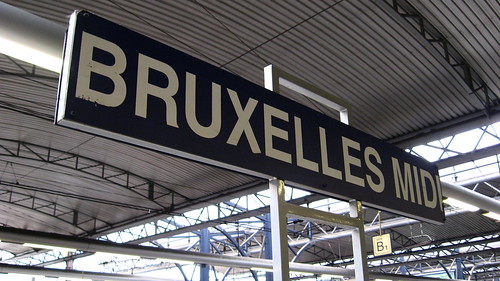
Belgium will be the fifth European country in five years that I am living in, but I don't feel like I am going "abroad". I am going away from where I am now, and it will be different from where I have been in the past. But that is not important, this is life in Europe.
In fact, I move to Brussels as a political scientist, as somebody who is trying to understand social and political regularities of a system called "European Union". These regularities may not even be specific to the EU, but I am interested in studying them for this particular case, a supranational political system.
This is actually the first time I will live in Belgium and in Brussels, and it is the first time that I will try to take a look at EU politics from inside "the bubble" (except for my short visit last October).
I'm intrigued by the change of perspective, although I still hope that I can keep the view of an outsider while trying to adapt to the living conditions of a new city and a new country.
I'm not sure what this will do with my blogging, because I've always been euroblogging from an outsider perspective. But as I have said above: I come as a political scientist, not as a blogger. Blogging will move with me, but that is because it is part of my European citizenship, not my profession. There is no need to be in Brussels to euroblog, to the contrary, it might even be better not to be there.
What I know is that as a political scientist I want to meet as many people working in and around the EU institutions as possible and talk about their work, their thoughts, see how they interact and how this makes them part of EU decision-making.
So if you'd like to meet me as political scientist or as a (blogging) European citizen, don't hesitate to contact me, I'm interested in a lot of topics and perspectives related to EU politics or life and work in the EU "capital".
Until then, I wish you a Happy Europe Day 2010, a happy 60th anniversary of the Schuman Declaration - and see you around, whether in Brussels or elsewhere in our Europe!
Picture: © redvers / CC BY 2.0
Saturday, 8 May 2010
My Europe (3): A blog...
... written by a single person is nothing but a single voice. It is only relevant in conversation with others.
In my Europe, we are all some kind of blogger. All we need to do is to relate to each other, to link our blogs and to start the conversations that may become one common conversation, one European conversation.
If we try to build a common European blogosphere, it is because we want to build a common European space - not one in which we all agree, just one in which we know what we are talking about.
But there need to be blog posts first. Blog posts that we can actually relate to. If we don't talk, we cannot have a conversation. If we don't have topics, we cannot argue about them.
In my Europe, we are all some kind of bloggers, and our individual blogs can be linked, either because we choose to link them or because they share common topics, natural links that we just need to discover.
A blog written by a single person may be nothing but a single voice, but my Europe is a continent with 800 million bloggers, 800 million voices that are part of a common blogosphere.
In my Europe, we just need to add the links.
In my Europe, we are all some kind of blogger. All we need to do is to relate to each other, to link our blogs and to start the conversations that may become one common conversation, one European conversation.
If we try to build a common European blogosphere, it is because we want to build a common European space - not one in which we all agree, just one in which we know what we are talking about.
But there need to be blog posts first. Blog posts that we can actually relate to. If we don't talk, we cannot have a conversation. If we don't have topics, we cannot argue about them.
In my Europe, we are all some kind of bloggers, and our individual blogs can be linked, either because we choose to link them or because they share common topics, natural links that we just need to discover.
A blog written by a single person may be nothing but a single voice, but my Europe is a continent with 800 million bloggers, 800 million voices that are part of a common blogosphere.
In my Europe, we just need to add the links.
Friday, 7 May 2010
My Europe (2): Jeanne d'Arc
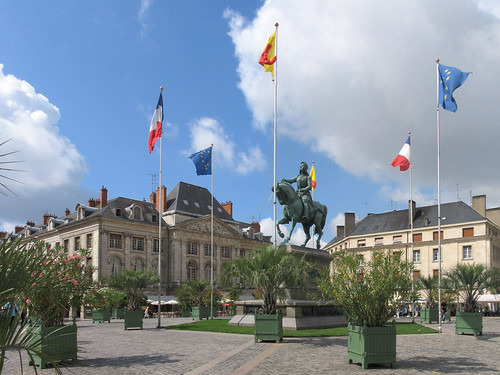
This is Jeanne d'Arc - or Joan of Arc - on the central square of Orléans, a city where I have been several times in my youth during school exchanges. Just good remembrances!
And Joan of Arc's story is a great European tale including national rivalries, the role of the church, medieval Europe etc. She is also one of the few "heroines" that are celebrated among the "great" kings and emperors that dominate story-telling of European history.
And I don't start talking about all the castles that we've visited in the Loire Valley...
Picture: © dojoe / CC BY-SA 2.0
The innovative Council
When I read "EU", "Council", "Presidency", and "innovation" I expect exactly this kind of document.
INNOVATION?!
INNOVATION?!
Joe Biden proposes OSCE reform
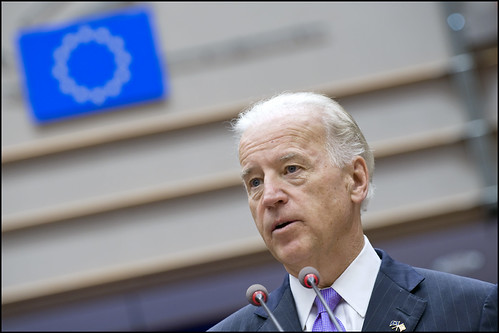
The vice president of the United States has published his proposal for OSCE reform - the US is a member of the OSCE - in the International Harald Tribune, a proposal which sound a little like a reaction to the Russian position, and may be kind of the US proposal for the "Corfu Process".
Different to Russian foreign minister Lavrov, Biden doesn't propose that OSCE takes over the functions of NATO to provide hard security on the European continent. That is no surprise, to be honest. To the contrary, he underlines that there is "the right of all countries to choose their own alliances freely" which is a clearly against Russian demands that NATO should not be enlarged towards the east.
What Biden proposes is a "OSCE Crisis Prevention Mechanism" that seems to be mainly a conclusion from the Russian-Georgian war and it is definitely a much smaller reform proposal than what Russia is envisaging.
I even have difficulties to see the difference to what OSCE already does today, for instance in the cases of Nagorno Karabakh (a frozen conflict between Azerbaijan and Armenia), Transnistria (a breakaway region of Moldova) or regarding the tensions between Turkey and Armenia.
So now we kind of have positions from Russia and from the USA - will we get an official EU position this year or while they try to wait for the Lithuanian OSCE presidency next year...?
Picture: © european_parliament / CC BY-NC-ND 2.0
Thursday, 6 May 2010
ECJ case-law involving the Council in the 2nd half of 2009
A freshly published document that could be interesting for all EU-law geeks:
"Case-law of the Court of Justice of the EU in cases involving the Council (1 July to 31 December 2009)"The full list of cases is in the annex.
Biden in the European Parliament: All quiet on the Western front
Joe Biden gave a 30 minutes speech in the European Parliament today.
Most of it was charming Brussels, Europe and the European Parliament, mixed with statements supporting human rights, privacy, peace and individual freedoms. But all this was intertwined with the obligatory "triple axis" as @martiadroher put it: "Security, Security, and Security".
He underlined that he wants to use Passenger Name Record (PNR) data and financial transaction data (SWIFT) to fight terrorism. He supported this with the success US authorities had in capturing the alleged Time Square terrorist thanks to PNR data (and probably other intrusive measures that are used against citizens who are not terrorists every day).
And he defended the need to be in Afghanistan, totally in line with the CIA recommendations (published by Wikileaks) on how to get more public support from Europe for this war (e.g. focus on civilian and policing aspects). His final sentence ended with the words "... and may God protect all our troops" which shows that this was his actual focus, these were the words he wanted us to be remembered: Troops, troops, troops.
It is not some God who should protect "our" troops, it should be politicians protecting them by not sending them to fight, especially not to places where you are not providing actual help for more security or democracy (Afghanistan is not peaceful at all after 9 years and Karzai is definitely not a democrat) but costing our societies so much money that one can rightfully blame these expenses as part of the debt problem that many European countries and the US are facing today.
Well, Mr Biden, that was a nice speech, but I'm not convinced, not a bit, that you actually bring the change you are advocating...!
PS: A German MEP has a picture on how Biden's speech looked from the plenary.
Update: Conor has also written about Biden's speech. Erin has reacted to the content of Biden's speech.
Most of it was charming Brussels, Europe and the European Parliament, mixed with statements supporting human rights, privacy, peace and individual freedoms. But all this was intertwined with the obligatory "triple axis" as @martiadroher put it: "Security, Security, and Security".
He underlined that he wants to use Passenger Name Record (PNR) data and financial transaction data (SWIFT) to fight terrorism. He supported this with the success US authorities had in capturing the alleged Time Square terrorist thanks to PNR data (and probably other intrusive measures that are used against citizens who are not terrorists every day).
And he defended the need to be in Afghanistan, totally in line with the CIA recommendations (published by Wikileaks) on how to get more public support from Europe for this war (e.g. focus on civilian and policing aspects). His final sentence ended with the words "... and may God protect all our troops" which shows that this was his actual focus, these were the words he wanted us to be remembered: Troops, troops, troops.
It is not some God who should protect "our" troops, it should be politicians protecting them by not sending them to fight, especially not to places where you are not providing actual help for more security or democracy (Afghanistan is not peaceful at all after 9 years and Karzai is definitely not a democrat) but costing our societies so much money that one can rightfully blame these expenses as part of the debt problem that many European countries and the US are facing today.
Well, Mr Biden, that was a nice speech, but I'm not convinced, not a bit, that you actually bring the change you are advocating...!
PS: A German MEP has a picture on how Biden's speech looked from the plenary.
Update: Conor has also written about Biden's speech. Erin has reacted to the content of Biden's speech.
The disrespectful MEPs
Joe Biden, the Vice President of the United States was expected to speak at 12:00 in the plenary of the European Parliament in Brussels*.
Since Biden was late, the regular session continued for another 20 minutes, but many MEPs were already coming into the room.
But instead of paying respect to their colleagues speaking, most of them were chatting, telephoning etc. and making such a noise that it was hard to understand the speakers, even on the web live stream. Even two interventions - rather hesitant but still - of the EP session president didn't make them keep quiet.
This is an absolutely shameful behaviour, and although this will not be in the mainstream news today, European parliamentarians have lost a lot of respect in my eyes today.
This was not my parliament, this was a bunch of kiddies without education, and non of those chatting in the plenary today should ever demand that silence was to be made when he or she is speaking!!
PS: Usually the EP plenary is empty and one person is speaking, this time it was full and everybody was speaking. Both are communication disasters.
* Update: See my summary.
Since Biden was late, the regular session continued for another 20 minutes, but many MEPs were already coming into the room.
But instead of paying respect to their colleagues speaking, most of them were chatting, telephoning etc. and making such a noise that it was hard to understand the speakers, even on the web live stream. Even two interventions - rather hesitant but still - of the EP session president didn't make them keep quiet.
This is an absolutely shameful behaviour, and although this will not be in the mainstream news today, European parliamentarians have lost a lot of respect in my eyes today.
This was not my parliament, this was a bunch of kiddies without education, and non of those chatting in the plenary today should ever demand that silence was to be made when he or she is speaking!!
PS: Usually the EP plenary is empty and one person is speaking, this time it was full and everybody was speaking. Both are communication disasters.
* Update: See my summary.
UK elections: What's at stake for the citizens of the EU?
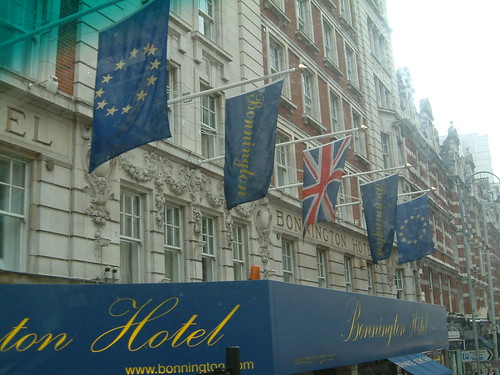
Whether or not there will be significant policy changes - which can be the case if the Liberal Democrats will gain enough seats to be part of a coalition government and which will be the case if the Conservatives win an absolute majority - these elections determine how and by whom the UK is represented in the EU institutions.
You don't think it is important who represents the United Kingdom and which policy programme is advocated by these personalities in the EU Council and the European Council?
Well, then you don't think that the regulation of financial institutions is an issue that concerns you. You don't think that it is relevant whether the UK will push for reforms in the Common Agricultural Policies of the EU or not.
You don't think that it makes a difference whether a Labour government, a Conservative government or a coalition of one of the two other with the Liberal Democrats will determine the new EU internal security strategy or the shape of the EU's External Action Service, including the precise nature of its tasks (e.g. regarding military capacities).
All these are issues which are discussed right now in the different EU institutions, and the British government is an important part of these discussions. And all these policies have direct impact on the lives of all EU citizens.
In short, if you don't care for the election results in England, Wales, Scotland and Northern Ireland, you don't think that the EU has any impact on your life.
Different to how some might want to frame the debate, the question of these elections is thus not so much about staying in the EU or leaving it. It is not the question: Will the Royal Union stay a Loyal Union to the European Union?
No, it's more profane: The UK elections partially determine the outcome of concrete future policies of the European Union. British citizens vote for the direction of their country today, but they also vote for a fraction of the direction the EU will take in the years to come.
So, EU citizens, take a look to the UK today and notice who will win - because this will affect your lives in the years to come!
Picture: © prasenberg / CC BY-NC 2.0
Comitology 2.0: Commission doesn't want parliamentary rights under Article 291 TFEU
In the Council report (page 8-9) from the recent meeting of the European Parliament Committee on International Trade (INTA) we find the true face of the EU Commission when it comes to the new parliamentary rights of the EP after the Lisbon Treaty reform (own highlight):
"A representative of the Commission explained that the proposal was aiming to simplify and make more transparent the existing four comitology procedures. He explained, that Member States could not stop an implementation measure on their own but needed a qualified majority to do so. He said that it did not seem necessary to repeat the scrutiny powers of Council and European Parliament in this Regulation."This quote refers to the the draft proposal concerning the implementing powers of the European Commission and the related comitology procedures (Article 291 TFEU).
Wednesday, 5 May 2010
Fish & Fields: EU reforms for the better?
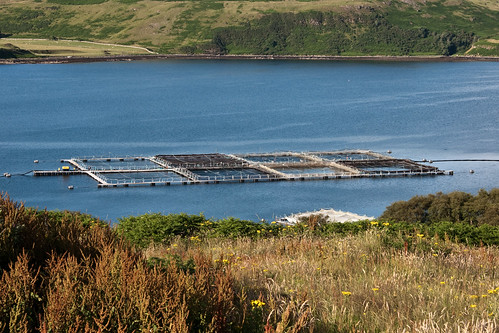
The Common Agricultural Policy (CAP) and the Common Fisheries Policy (CFP) of the European Union need reform, and with the informal meeting of EU ministers responsible for fisheries (see also: Euronews) and the data harvest of CAP subsidies for all member states - except Great Britain - there were two notable events on Monday and Tuesday that made the euroblogosphere talk about CAP and CFP.
Both reforms have already begun with public consultations but their outcomes are uncertain.
The fisheries policy consultations are already finalised, with over 300 reactions from the public and interested stakeholders as well as a statement by the EESC, the European Economic and Social Committee (a consultative body of the EU). In the light of these discussions, the European Movement in the UK also sees an urgent need to reform the fisheries policy and not to let the CFP slip back into the hands of the member states. (Update:) And the Commission seems to agree.
In the same business, but on the fields instead of on the sea, the EU Commission is inviting the public to participate in the CAP reform consultation. This is more necessary than ever seeing that the subsidies spent through the EU's agricultural policy are largely misdirected. Without a reform of the CAP, the whole "Europe 2020" reform will not be possible as Valentin notes, not least because most of the EU's budget is wasted for large-scale agriculture, to the disadvantage of the future of the EU and to the disadvantage of farmers all over the world, instead of investing it in future technologies and the brains of EU citizens.
And so, while the National Farmers' Union has reportedly issued its vision on the future of agriculture in the EU and while Commissioner Ciolos is already participating in different consultation meetings - e.g. in the EESC - it remains absolutely vital that people like the guys from Farmsubsidy.org keep track and follow the subsidy money to give a real basis for the debate - e.g. that the number of "CAP millionaires" continues to rise - both for us bloggers but also for the mainstream media.
Most eyes may be on Greece these days, but we should also keep our ears open and listen to the proposals for the fisheries and agriculture reforms because they will be as important for the future of the Union as the stability of the financial markets.
Picture: © marcs-album / CC BY-NC 2.0
Even the EU press corps...
... needs to rest from time to time.
It is already three years old but I discovered it only now thanks to @euonymblog.
It is already three years old but I discovered it only now thanks to @euonymblog.
Tuesday, 4 May 2010
/... Fluid paper
/... fluid paper from michel klöfkorn on Vimeo.
This film - titled "/..." and subitled "Flüssiges Papier" ('Fluid Paper') was edited by Michel Klöfkorn and has been shown on Sunday during the International Short Film Festival Oberhausen.
What you see are cuts through photo books.
Europe Today
Very ambitious: Europe Today, a European newspaper not focused on EU institutions or financial issues.
The details are in their fact sheet (PDF) and I wish them good luck.
They were at least clever enough to seize the opportunity of today's European Parliament chat on the role of new media and the European Public Sphere to draw some attention to their project.
What do you think - will they succeed?
The details are in their fact sheet (PDF) and I wish them good luck.
They were at least clever enough to seize the opportunity of today's European Parliament chat on the role of new media and the European Public Sphere to draw some attention to their project.
What do you think - will they succeed?
My Europe (1): Trains
It is "My Europe Week" and instead of writing long articles I am looking for photos that make me remember my Europe.
In the early times of this blog I wrote a post titled "Talking to Europe" in which I told some stories I experienced while travelling though Europe on trains. Below are 11 train stations in 10 countries, many of them starting points or destinations of the stories told in the blog post.


All these train stations are part of my European story, and my Europe definitely is a place I have discovered a lot by train.
PS: What is your Europe? Join #myeurope on Twitter or submit you blog posts through this form.
In the early times of this blog I wrote a post titled "Talking to Europe" in which I told some stories I experienced while travelling though Europe on trains. Below are 11 train stations in 10 countries, many of them starting points or destinations of the stories told in the blog post.

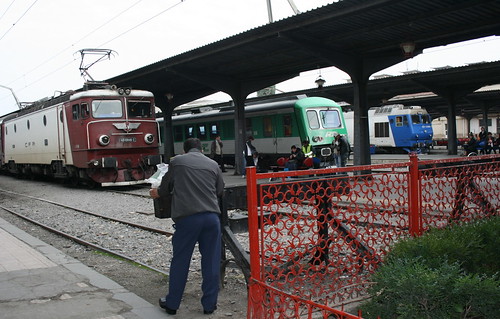
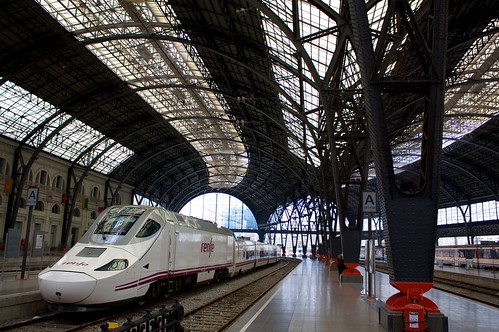
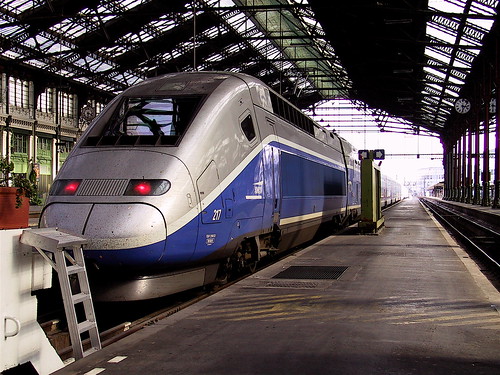
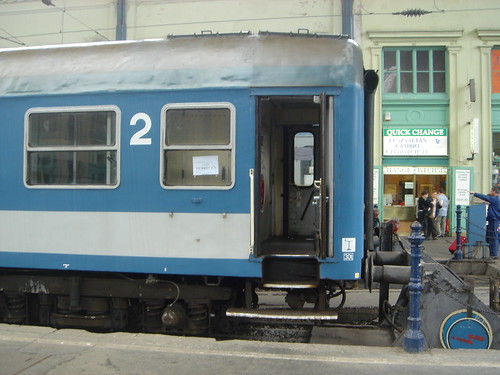

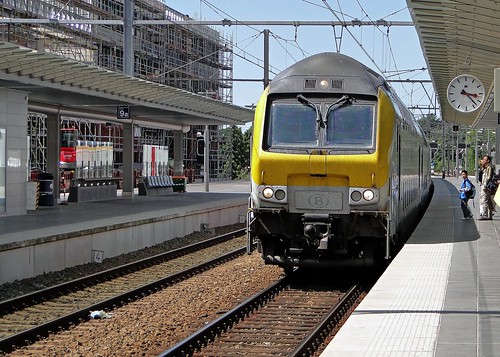
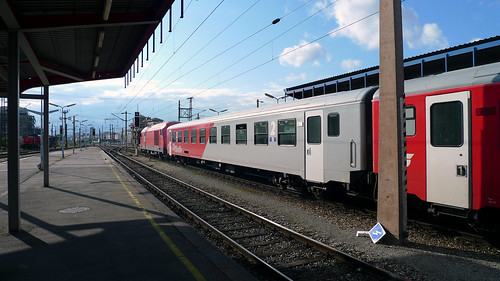

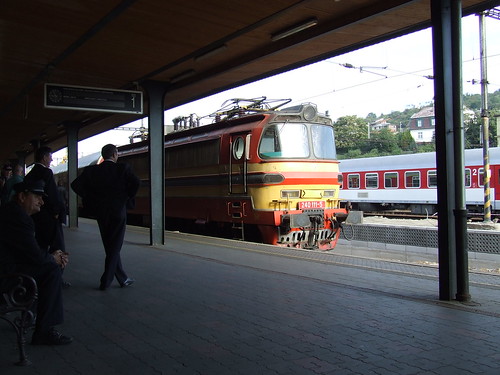
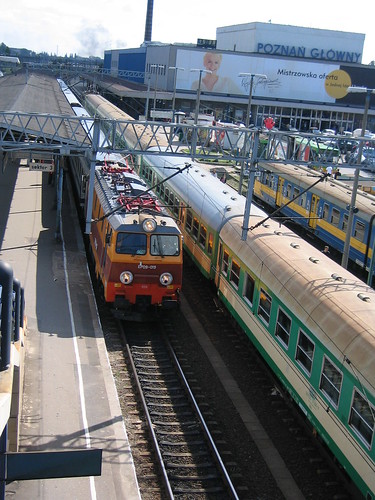
All these train stations are part of my European story, and my Europe definitely is a place I have discovered a lot by train.
PS: What is your Europe? Join #myeurope on Twitter or submit you blog posts through this form.
Euroblogging journalist Prune Antoine wins two European young journalist awards
Sometimes people who actually deserve it win prizes, and this time it is fellow Euroblogger and Berlin-based French journalist Prune Antoine for her article "Pologne - Quand les parents sont partis" (English translation on page 28 of this booklet).
 I was really amazed when I read in her private blog this morning that she has won two prizes at once for her article, the European Young Journalist Award 2010 for France and also the Louise Weiss Award for European Journalism 2009 (category "Junior").
Here is the reasoning of the jury of the European Young Journalist Award:
She is a true European, combining French culture with the easy-going-ness of Berlin and a deep understanding of "the East", and she is brilliant because she can write incredibly serious articles like the one you read above as well as killingly funny blog posts commenting on life in Berlin, EU politics and discussions in other euroblogs.
I've just spoken with her on the phone to congratulate and she was still surprised and enthusiastic - but if there is anybody who deserved to win the prizes it was Prune! Congratulations!
PS: Prune is a freelance, so if you ever need good reporting (e.g. from Berlin or Central and Eastern Europe), you should really get in contact with her!
 I was really amazed when I read in her private blog this morning that she has won two prizes at once for her article, the European Young Journalist Award 2010 for France and also the Louise Weiss Award for European Journalism 2009 (category "Junior").
Here is the reasoning of the jury of the European Young Journalist Award:
"In France, it is the ”euro orphans” phenomenon, tackled by Prune Antoine, that held the attention of the jury. The article entitled ”Poland: children of no-one” distances itself by the originality of its subject. The migratory wave from Eastern Europe countries and its consequences on family are analysed through an in-depth analysis and a wide range of points of views. In Prune Antoine’s uncluttered style, sociologists, politicians, headteachers, ”orphans” and ”orphans’” parents lead the reader behind the scenes of this massive emigration “resembling an economic miracle”. The journalist’s well-structured argument is a true field investigation that offers a relevant debate with proper context and careful illustration."I had just met Prune - who writes the beautiful Euroblog "L'Europe en Blogs" and was part of my "20 women who run the EU (blogosphere)" - in Berlin in March and we ended up talking about Europe, blogging, journalism and life between the East and the West which we both share.
She is a true European, combining French culture with the easy-going-ness of Berlin and a deep understanding of "the East", and she is brilliant because she can write incredibly serious articles like the one you read above as well as killingly funny blog posts commenting on life in Berlin, EU politics and discussions in other euroblogs.
I've just spoken with her on the phone to congratulate and she was still surprised and enthusiastic - but if there is anybody who deserved to win the prizes it was Prune! Congratulations!
PS: Prune is a freelance, so if you ever need good reporting (e.g. from Berlin or Central and Eastern Europe), you should really get in contact with her!
Monday, 3 May 2010
Access to Commission documents
This is just an example:
I was searching for the European Commission working document Sec(2010)426 in their document search and what I get are these results without any link to the actual document(s).
However, the document is accessible on Eur-Lex, in the Council register and even somewhere on the Commission website where it can be found via Google.
Why not making it public through the actual document search of the Commission if it is public anyway?
I was searching for the European Commission working document Sec(2010)426 in their document search and what I get are these results without any link to the actual document(s).
However, the document is accessible on Eur-Lex, in the Council register and even somewhere on the Commission website where it can be found via Google.
Why not making it public through the actual document search of the Commission if it is public anyway?
German minister against Three-Strikes & website blocking
The German Minister of Justice Leutheusser-Scharrenberg has published a long article (Google translated) in which she defends a free internet against demands to block websites or to introduce Three-Strikes-Legislation in case of copyright violations.
She underlines that she will fight against those proposals both on the EU level as well as during the ACTA negotiations.
She underlines that she will fight against those proposals both on the EU level as well as during the ACTA negotiations.
Ex-EP president Pöttering loves his privileges
German news report that former European Parliament president Hans-Gert Pöttering still has the right to use his car and driver.
 In addition, Spiegel Online informs, the rules have been changed right when he left office and were confirmed by his former assistant Klaus Welle who is now Secretary General of the European Parliament.
It is ridiculous and shameful that worn-out politicians like Pöttering keep their privileges after just 30 month in office, costing the taxpayer thousands of Euros while demanding citizens to get their salaries and pensions reduced.
Nothing against the respectful treatment of old men, but Mr Pöttering, you should give away this car!!
(via @mteu)
Picture: Julien Frisch, taken during this event.
 In addition, Spiegel Online informs, the rules have been changed right when he left office and were confirmed by his former assistant Klaus Welle who is now Secretary General of the European Parliament.
It is ridiculous and shameful that worn-out politicians like Pöttering keep their privileges after just 30 month in office, costing the taxpayer thousands of Euros while demanding citizens to get their salaries and pensions reduced.
Nothing against the respectful treatment of old men, but Mr Pöttering, you should give away this car!!
(via @mteu)
Picture: Julien Frisch, taken during this event.
Subscribe to:
Posts (Atom)

